Showing posts with label Edinburgh. Show all posts

Losing my Fringe Virginity

One of many excuses I have for my lax blogging of recent (sorry) is that I have been spending time with a rather gorgeous, funny and sexy woman whose constant smiley face has caused me to forget large portions of my life in the pursuit of fun times together. Consequently my bloggage went down the pan a bit.

However, for various reasons, we have a quiet patch coming up until Christmas, where we will be jetting off round the other side of the world. No, not Japan this time (although I hope to persuade her at some point of it's merits), but somewhere hotter and more exotic. I'll say more nearer the time.
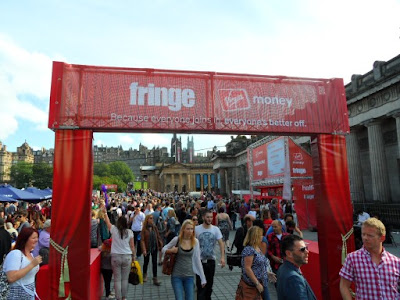
So, we have just got back from a week in Scotland - our first major time off together, seeing whether we gel, or whether we drove each other nuts. We chose this week to take in the sights and sounds of the fantastic Edinburgh Fringe Festival. We were both fringe virgins, (which was appropriate since Virgin were covering the place with blanket sponsorship) and so was a completely new experience for the both of us. We watched a few plays, went to some music gigs, but mostly it was the comedy that took up our days. Just about everyone you could think of was there, and that only made up a fraction of the acts.

In the evenings we retired to our little pod in the cheekily-titled Adventure in the Meadow campsite, a place full of teetering wooden tents and outside washing facilities. It looked half complete and some people's pods were down a track in a mud pit, but we got lucky with ours as it was right next to the main house and largely on the level, so it was for the most part pretty reasonable, and their breakfasts were big enough to be able to hold down a medium sized carnivore. A quick jaunt to the nearby park and ride, and we could saunter in on Edinburgh's excellent bus system for midday.

Some Highlights

Our choices of acts were almost universally brilliant. After missing the delights of sound machine Michael Winslow (Police Academy), we started with the unusual but excellent poet and comedian Tim Key, who in amongst recitals of his usual brand of existential humour, dunked his head and more in the foamy bath he had placed on the stage in front of us.

The pin in the catalogue choice Laundry Boy turned out to be another highlight. It was a really well performed play about a lonely man who grew up leaving his childhood dreams behind and blaming his father, while forming intimate relations with a vacuum cleaner. All the actors were excellent and didn't put a foot wrong in their performance.

David Sedaris, for anyone who has heard him on Radio 4 was hilarious; building up the humour - a mix of gentle and quietly anarchic - in stages until the audience was completely helpless. At the end, I got a booked signed by him and had a quick chat! It was worth the queue.

Mr. Darwins Tree was a fine play that we caught on it's last day. Performed entirely by Andrew Harrison, he charted with passion the life of the man and his work, bringing over just a little of the personal struggles he faced along the way.

Sarah Millican and Andy Parsons were both headline acts at the assembly halls and managed to pack the place out both times. They were as funny as ever (at one point I had actually become unable to laugh any more), although SM had toned things down since I managed to see her earlier in the year which may have been for the best. Dave Gorman narrowly beat them both though, packing out the university with his powerpoint presentation, a much welcome return to his roots. I can't walk past an advert for a phone without scrutinising it now.

There was also Lights, Camera, Walkies - a pretty good play about a movie where the main part is a dog - without any dogs present. Many characters played by just three actors who all earned their pay. Elsa Jean McTaggart was our only music act, and though she had a strong but velvety singing voice and could set the strings of her violin and guitar alight with her playing, the small audience she attracted in the mid afternoon didn't do her justice.

Tim Vine chatted with members of the audience who were unlucky enough to be picked and had a guest spot by Brian May, and Henning Wehn managed to make a mockery out of our view that the Germans have no sense of humour. Robin Ince had a gig in the Free Fringe section which was brilliant value. Not only did we get the Ince, but several other fringe acts, including Dave Gorman, came on and did a bit of stand-up too. (at the end, I also asked about Nerdstock since it was missing last year - and it's back on!). Finally, the Free Fringe also turned up Fraser Millwards, who played a copper, a relationship counsellor and a coach driver - the latter bundling the audience outside to the coach that had been 'stolen' - and nearly getting himself hilariously knocked down (in an unscripted way) while running off in all directions looking for it.

Finally - also in the Free Fringe - The Gherkin Fantasies were a pair of comedians who we went in to see on a whim and they turned out to be refreshingly Yorkshire, which obviously scored points with us - although they were also very funny in their own right too, playing a pair of middle-aged male butchers, among other creations. I'd put a safe bet on that they will be on the telly in a couple of years.

There was really only one rubbish one, and that we had managed to go into thinking it was something else. The Culture Bucket quartet reviewed other shows on a daily basis, and I'm guessing that it changed daily, so they had little time to practice or even make their show - but it was a pretty dire thing to watch even so. We stayed to the end but scrambled for the door as soon as we could.

------------

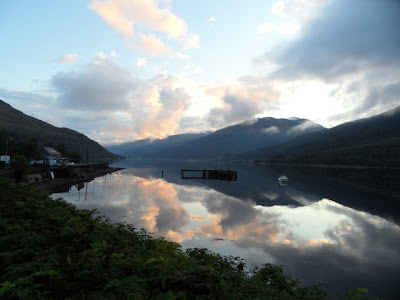
After staying an extra day to catch some additional acts, we headed out into the Scottish Highlands. Our time was a little constrained, but we managed to head up to Loch Lomond

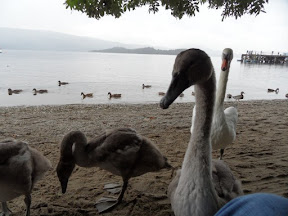
(a beautiful place where we were attacked for our sandwiches as we sat on the beach by an overly-confident swan family) before ending up at a pleasant little B+B in Arrochar, located snugly in a valley at the tip of Loch Long in the shadow of it's own set of alps.
On the next day we drove a little down the length of the Loch, before ending up at Benmore; one of the four Edinburgh Botanical Gardens.

Out here we would have expected it to be dead, but a coachload of passengers got in front of us in the queue to get in. Inside is a mixture of nicely kept mansion gardens, with hillside pathways and a wilder flora. The view from the platform at the top is beautiful and as quiet as you could ever experience.

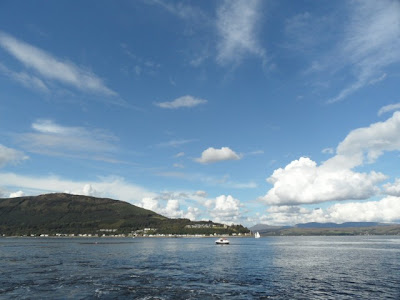
We took the ferry at Hunters Quay back to the mainland and headed home just as the heavens had opened and the rain was falling harder than I'd ever seen it.

We both loved our first Fringe, and it definitely wont be the last. We are already planning on how to fit it in next year!

EIFF 2011 - Day 4

The Borrower Arrietty (Jpn) (site/wiki)

I saw this while in Japan, and although it was in unsubbed Japanese it was pretty easy to get the main body of the storyline. So I was interested in seeing what an English voice cast would be able to manage. The Disney translations of the Ghibli films started out a little choppy (Kiki and Laputa especially received some pretty fundamental changes to their script and even their soundtracks) but eventually the translators listened to common sense and the later ones have remained pretty faithful.

What did they do with this one? No idea. When the curtain went up and the shimmering TOHO logo appeared rather than the Disney one, it was clear we were getting the Japanese one again with subtitles. I'm actually quite happy personally, as the change in language might have been a bit distracting, but there was the odd intake of breath from audience members realising they would have to do a bit of reading, especially from the [largely well-behaved it has to be said] young ones in the audience. After a moment or two everyone settled into the subs and it proceeded swimmingly.

Kuragurashi no Arrietty is based on the Borrowers stories by Mary Norton. Arrietty is a young borrower from a family living in the floorboards of a country house in Tokyo. She is just reaching the age where she can take care of herself, and is looking forward to her first 'borrowing' trip accompanied by her father Pod, padding silent and unnoticed through the walls and behind vases of the house to get a few supplies. After a promising start, she is spotted by Sho, a boy visiting his aunt Sadako who lives in the house and maintains it for Sho's absent family. Sho is sick and awaiting a heart operation, but is still viewed with fear and suspicion as a threat to the safety of the borrower family. With perseverance, Sho begins to earn Arriettys' trust, but aunt Sadako's suspicions are raised and maybe she will at last encounter one of these house pests before they steal anything else.

Arrietty is a return to a more contemporary setting for the Ghibli films, which puts it into a group with my particular favourites, such as Only Yesterday and Whisper of the Heart. It's as usual beautifully drawn, with Kazuo Oga providing his trademark backgrounds and Miyazaki himself doing the screenplay, although he stepped aside from directing to give the up and coming Hiromasa Yonabayashi a turn. You can even spot a trace of the much missed Yoshifumi Kondo in the art style, which after films such as Sen and Ponyo, took a bit of a back seat. As you can probably tell, I loved it. A beautiful story, gentle soundtrack and appealing hand-drawn visuals with little if any computers used. It even has a strong ending, which is where some Ghibli films have occasionally fallen short.

I can't see any problems with the translation when it is eventually screened. Although the story is more mature and delicate than the John Goodman Borrowers film (which by comparison went little beyond a procession of slapstick encounters) there was nothing in this one that might need altering for an English-speaking audience due to sensitive issues or local custom, so fingers crossed they will do a sterling job. And I have no issue with watching Arrietty for a third time when it gets a proper release later this year. 8.5/10

Mama Africa (Ger/S.Africa/Fin) (review)

When Miriam Makeba, a young and upcoming African singer agreed to sing a couple of inspiring songs as part of an anti-apartheid film in 1959, she had no idea the troubles it would cause her. Attending the Venice Film Festival to be there to receive the Palm D'or that year, she crossed a line that the South African government found unacceptable, and she was exiled from her home country. She went to America.

There she further developed her singing career and also spoke actively against the apartheid regime, as well as acting as an inspiration for her African-American cousins in her adoptive country, who were under much the same sort of oppression, in the land of the free.

Mama Africa (a name she came to be known affectionately by over time), not only brought African music to a western audience, but also managed to be a force to be reckoned with in the civil rights movements at the time, twice a passionate spokeswoman for the UN for the boycott of dealings with South Africa, and there at the eventual release of Nelson Mandela, who once he became president, gave Makeba back her citizenship. Right up until her death, she was a passionate and beloved speaker and activist for the rights of her people.

Miriam Makeba died in 2008, and this film helps bring together all the aspects of her life, the hardships and struggles, and her heartbreaking family tragedies, and also a taste of her work and influence beyond her life, warmed throughout by her clear and beautiful singing voice, some of her songs you might surprise yourself by recognising. A great way to end my festival experience. 7.5/10

==================

Yes, that's all folks, for Edinburgh this year at least. If you wanted more please pen a stiffly-worded letter to my boss who didn't let me take next week off so I could see more. As it goes, I'll just have to try and make things up in September with Cambridge. Hey ho.

EIFF 2011 - Day 3

Whisky Galore! (UK) (wiki)

Slowly but surely, I'm knocking off the Ealing comedies one by one, so when Whisky Galore - one of the earler ones - showed up in the list in a quiet slot, I made sure I got a ticket.

On a remote, Outer Hebridean island sits the small town of Currie, the inhabitants lead a quiet existence in wont of nothing, at least until the supply of Whisky on the island completely dries up thanks to the war rationing. Help is on hand in the shape of the SS Cabinet Minister, a ship on its way with prescious restocking of the stuff, which unfortunately runs aground on the rocks before it can get to the shore. Not so good when two of the young bucks of the town are proposing to their fiances and there is a celebration to be had (on top of all the other excuses anyway), so when the town learns of the precariously-angled ship on the verge of sinking, they make for the waves in whatever boat they can get hold of, while trying to keep the towns' only upstanding law abider Captain Waggett of the local home guard out of the loop and unawares of the smuggling.

It was nice to see, but one of the weaker Ealing comedies, not having the focus and refined scripting of, say The Ladykillers. But it had it's moments, some cheeky digs at the scots and their love of the dram, and the action builds to a pretty good chase at the end. 7/10

Bobby Fischer Against the World (UK/US/Icl) (site/review)

A good documentary can make entertainment from any subject matter. Chess is certainly one of the less socially popular forms of entertainment around at the moment - try to engage your close circle of friends on the subject and you're likely to get a series of blank expressions, and an expectation to move back to more familiar ground unless you wish to be ostracised. But even chess had it's day in the social spotlight, nearly 40 years ago, in 1972.

Bobby Fischer came out of nowhere, a Brooklyn kid with a focused genius in the game that went to obsessional levels. He was also arrogant, short tempered, and a bit of a prima donna. Still he gained recognition and massive respect with the chess community, and beyond. At the time, the Soviets took every chess crown, and used the game to play politics with the Americans, as the country of intellectual and strategic prowess. Henry Kissenger himself worked to get Fischer into the 1972 showdown match against Boris Spassky, to put one in the eye of the Soviet political chess machine. Fischer was rude and arrogant, demanded more money for competing, and turned up an hour late for his first of a grudging 24-match marathon. But he won, and took the crown of the World Chess Champion for 1972.

But the story has much more to go from there. This was Fischers' high point of his tragic life. The praise and adulation, and the attention that came with it when he returned to America started a long and painful process of self-destruction. One that turned him from arrogant but likeable hero in the eyes of the ruskie-hating American public, to a reclusive, psychotic anti-semite, betraying his Jewish roots and cutting him off still further from his small circle of remaining friends.

I watched Bobby Fischer open-mouthed, knowing nothing of the man and finding it incredulous that such a shattered life had occurred under the catalyst of such a seemingly benign sport, but as the film goes on to explain, true chess grand-masters need that unusual mix of genius and psychosis that allows them to own the board and the myriad of moves that are available to them and their opponents at any one time, and a life spent wholly staring at 64 squares and nothing else, will be a life that struggles to comprehend the complexities of the rules of life outside. A compelling documentary. 8/10

Tender Son: The Frankenstein Project (Hun/Ger/Aus) (a rather scathing wiki entry)

Kornel has made a comfortable existence for himself persuing his dreams of being a film director after a bit of a blip in his earlier, more sleepy-aroundy days. But an aspect of his past - a feral, hormone-filled son of a past, looking for answers and vindication, comes fist-dragging back into his life when, after clumsily leaving a bunch of flowers at the home of the mother who abandoned him to an orphanage, takes part in Kornel's latest audition. Neither father nor son is aware who they've stumbled upon, but when the improvised audition goes really wrong, the boy is forced to flee, only to return to his mothers' for sanctuary, where fellow orphaned teen Magda stirs feelings in the monster boys' loins.

As you can expect from such a title, the film is a contemporary re-imagining of the Mary Shelley novel though you could easily miss the relationship unless it had been pointed out. The film does manage through darkened rooms and pregnant silences to recreate the brooding sense of a monster fighting helplessly with his anger and primal urges and trying to be 'good', and Kornel's role as the man tasked with putting the creature beyond harm is imaginative if underused. But the film does fall short of being a good one because of it's bloated runtime, and a needless shifting around of the characters in the laboured middle section, which tries to explain out some of the mysteries the first quarter brings up. By the time the final third comes along, you're already tracing through the original story to see how long it is before the film ends, and you don't want that as a director. 6.5/10

Shut Up Little Man! An Audio Misadventure (Australia) (site)

The term 'Audio Verite' has been coined to mean the surreptitious recording of an event for the amusement of others. One particular example are the end-of-the-world 'conversations' between two elderly men in a San Francisco apartment by a pair of young students who moved in next door to them in the late 1980's. Peter J. Haskett and Raymond Huffman are massively morose and irritable alcoholics living together in a dingy flat, and when the drinks begin flowing, so does the cussing. They cuss each other bad, in fact. So bad, that Eddie and Mitch decided - initially in case something bad happened and they needed evidence for the police - to record their conversations by strapping a microphone to a ski pole and hovering it in front of their window.

What they caught on several hours of tape came to be known as 'Shut Up, Little Man!', a phrase Peter would often use to talk Ray out of an argument. Word got around, people started asking for copies, and it began to snowball.

What started out as a prank and a laugh, started to have consequences. Record companies started ringing. People wanted copies from all around the world. Because the boys had just made the tapes and stuck them in the public domain, people started doing things with the material - comic books, audio mashups, and even an LA stage play. When it got to the point that several movie producers were trying to get in on the act and things were starting to turn ugly and legal, it was clearly time to try and sort the mess out, and perhaps even give some of the royalties to the unsuspecting people at the centre of it all.

Shut Up Little Man!, is a guilty laugh at the start, you're in there giggling at the things they got on tape, but the middle section kind of runs out of puff, explaining the legal complications and getting a bit samey in content as if the guys were only wanting a certain amount of material released into the film so they had to repeat some of it. The ending however feels a lot warmer, as the guys involved, now middle-aged and more mature, look on their subjects with a more affectionate eye, especially as Tony - a friend of the squabbling pair who occasionally came round to the flat and is the only surviving link to the conversations - is finally interviewed as a frail shadow of himself - and still none the wiser of his global fame.

The dip in the middle doesn't harm the film so much (and could have something to do with my heavy eyelids), and the piece as a whole takes the viewer through the whole emotion spectrum, including a lot of laughs. 8/10

EIFF 2011 - Day 2

Stranger Than Paradise (US/Ger) (wiki)


Supposedly a cult indie classic from the director of Broken Flowers, Stranger Than Paradise tells a tale of disaffected, directionless youth in 1980's New York. Shot on hand-held camera with a grainy black and white quality, it is less film noir, and more film grunge. Workshy layabout Willie has little more than a poncy hat to his name, spending all his time lolling about a scruffy flat, occasionally entertaining the company of fellow layabout Eddie. When his Hungarian mother rings to ask him to babysit his teenage cousin Eva, it's obviously something that can't fit into his busy schedule, but somehow he is persuaded.

Something clicks over the next ten days in Willie's underutilised little mind, and after she moves onto greener pastures back in Cleveland, his little brain, aided by the gambling habits of Eddie - who also develops a crush - comes up with a long term plan to go visit her. You know, just popping by while in the neighbourhood.

Director Jim Jarmusch (who is a 2011 EIFF guest curator) paints a largly pointless existance of pretention and laziness in the absence of a direction in life, where motivation and decision are more than ever based on the acquistion of power and sex. But it is a labour to go through the extended blackouts and choppy acting to encounter it's more enjoyable aspects, the most appealing of which is the straight-talking aunt Lotte who has some of the best lines. 5/10

Tomboy (Fra) (wiki)

As 10-year old Laure suffers the stresses of a house move on account of mum being pregnant with a new little brother to go with her and her cheeky younger sis Jaqueline, a moment of childish fun threatens to make any life in her new area a complicated misery. Laure is very boyish, and for the first part of the film any audience member who hadn't read the synopsis would swear that's what she was. She hangs around with the lads, wears neutral clothing and gets into fights, many of which she has come out on top. On the way to meet with a group of kids from her new area she happens upon Lisa, and for reasons even Laure cannot fathom she goes along with Lisa's mistaken assumption that she is male. New boy Mikael is invented in an instant.

As you may suspect, situations where shirts come off for football, trunks go on for swimming, and people head into the bushes to answer the call of nature all present problems for the rapidly snowballing problem that Laure has made for herself. When her canny little sis (easily the star of the show) catches onto the situation and insists on tagging along in order to keep the secret from her parents, it all begins to unravel, just as Laure was being accepted into the future schoolyard clique.

A story of small problems seen big through the eyes of children, and the lessons that have to be learned about boundaries and the beginnings of sexuality, Tomboy playfully experiments with the logical conclusion to such a ruse, with an even mix of uncomfortable and amusing events along the way, but is handled with intimacy and care. 7/10

Jane's Journey (Ger) (site)

Prior to seeing this film, Jane Goodalls' work was to me restricted to her research and conservation work with the chimpanzees in Tanzania, Africa, a calling which made up a lot of her earlier life's work in the 1960's. But as this film rightly celebrates, this is only a small part of her current global influence.

Now in her late 70's she refuses to slow down. Still travelling around the world as ambassador and activist, author and inspiration, her work has evolved over the last 25 years. Two of her main branches of influence, the Jane Goodall Institute, and the Roots and Shoots campaign have overlapping aims but are generally concerned with the protection of the animals, the environment and the humanity that exists with both of them. The film is roughly split down the middle concentrating on these two major contributions, and the recognition that she has received for both. This is broken up and interspersed with intimate interviews with Jane at her Bornemouth home about her early life and influences, her partners and her not always ideal relationship with her son, Hugo. Through all her work, rewards and recognition, Jane Goodall remains as friendly and genuine as anyone you could hope to meet.

This is an excellent, gently crafted film, and a celebration of the work of a woman whose inflience has truly made a global difference, and capable of melting the stony resolve of any anti-environmentalist. If I had one criticism, it would be that the film feels a little self-indulgent at the time, but this is easy to forgive for such an influential person. Mary Lewis, the VP of the Jane Goodall Institute and Adina Farmaner the Executive Director, took some time out from her work to be at the UK premiere and answer a few questions at the end, as unfortunately Jane was at that moment talking with the Dalai Llama in Dubai. They were very personable and approachable, and was a special bonus to a really great film. 8.5/10

Fast Romance (UK) (site)

When director Carter Ferguson came out on stage and announced that this was a low budget film, set in Scotland, and featuring a home-grown cast, many of which were in the audience, my heart sank at the resurfacing memory of an almost identical circumstance this time last year. It was even the same screen room. Fortunately, whereas Spanking went down the route of forgettable rough-and-ready sweary gangster fare, Fast Romance opts for a cheery romantic comedy angle, and was much better.

The film concentrates on seven thirtysomethings (or thereabouts) in Glasgow, whose lives cross in the Fast Romance speed dating event. Loner gamer Gordon is on the verge of losing his job at the post office, and his inwardly quiet boss Kenny seems too distant to make any friends at all, what with his family problems. Bookish Fiona and overly talkative Nadine are best friends and bridesmaids to Lorna, on the verge of getting married. DI Spencer, an undercover copper who likes to take an interest in the private lives of his community comes along, but he and all the other guys are seriously intimidated by Elliot, the smooth talking and handsome guy who shows up and makes everyone else look and feel like a troglodyte.

So we get some initial pairings, some relations work, some don't and everyone's lives cross and intermingle. The usual fare, but done well. One thing that the film doesn't do is try to rest on the reputation of Glaswegians as drunken louts. Most of the characters have a genuine likeableness to them, which is always helpful to get you into the swing of the film. It's an appealing romantic film to see if you and your partner want something that gives you a warm feeling and a laugh, and doesn't go too gooey and sentimental (although they do lay on Kenny's backstory a little thick), with characters and situations that will cause both sexes to laugh and smile. 7.5/10

EIFF 2011 - Day 1

The stormclouds of Edinburgh loomed overhead as I made myself to the Festival Theatre, where the opening night film was starting. Fortunately I made it before getting too drenched. The theatre was full to capacity and after a brief introduction by John Michael McDonagh, the director of The Guard (who apologised for not insulting the Scots as much as everyone else in the film) the plush red velvet curtain was raised and we were off.

The Guard (Irl/UK) (imdb)

Gerry Boyle (Brendan Gleeson, in a role he was born for) has a comfortable job, his many years of experience has turned his policing of the local village into a continuous lazy afternoon asleep at the wheel of his car. Petty crooks either end up cancelling themselves out, or doing stuff not worth waking up for.

But things get unacceptable when a gang of high-stakes drug-dealers come onto the scene and start using the village and its port for their logistics, while at the same time two new law enforcers start to push Boyle's nose out of joint - the wet behind the ears Sgt Aidan McBride, and straight-laced FBI agent Wendell Everett, (played by Don Cheadle - not best known for his comedy parts) - who both question Boyle's style and attitude as the psychotic and philosophical drug dealers get uncomfortably close.

In Bruges was directed by McDonagh's brother, Martin, and there is much to connect the two films, although The Guard is definitely more laugh-out-loud funny than it's more serious cousin. Gleeson who stars in both is wonderfully matter-of-fact in his casual racism and ignorance, law breaking and nicking the odd firearm, but is also given a softer edge of a man past his prime who deep down wants to do the right thing. It's massively sweary, a little bit shocking and is devillishly funny stuff that got the audience laughing pretty much constantly. (Also look out for Pat Shortt - Father Ted's Tom, doing his recognisable gurn.) 8/10

Edinburgh International Film Festival 2010 - Day 5

Skeletons (UK) (trailer)

Two men, a bit past their prime walk the countrysides of England looking for houses that match the scenes on pieces of paper they carry. They enter the home, talk to the people and get them to sign some papers, and then head upstairs with a Ghostbusters-style energy meter and protective clothing.

Davis and Bennett are paranormal investigators, but in a slightly different world where it is treated as an accepted science. These two have been at it for years, part of a shadowy company dealing in all sorts of jobs where paranormal readings might help. Unfortunately, they have been on the bottom rung for quite some time, and head in almost like rat catchers, their aim only being to remove the skeletons from peoples' closets. Literally. Using their tools to enter the memories of these people, they can uncover truths they wanted to tell, or maybe wanted kept hidden, but always best out in the open.

Bennett is a giant of a man, kind but a little dim, he always tries to keep a moral grounding in whatever he does. Davis is sour and bitter, and does highly illegal 'Glo Chasing' - transporting his mind back to a time with his parents when he was happy and safe, living it over and over.

At the same time their boss comes with news of a promotion, they find a particularly tricky job to do. A wife has lost her husband several years ago, and he may be dead. Taking it upon themselves to do what they can in a job one step up the skill ladder from what they are used to, they set about searching the house for spiritual clues, but something isn't right, and the teenage daughter is being a bit too cagey. When things start to go wrong, it gets very bad for both of them.

Low budget films are often some of the best, because the meagre budget necessitates a compelling storyline above everything else. Skeletons is an example of this (Kin is another) and manages both great comedy and tragedy without any of it feeling forced or unnatural, even with the paranormal aspect. It's smart, witty and complex, and even though the final scenes were quite predictable, it was certainly fun getting there. 8/10

Restrepo (US) (trailer)

Restrepo is the name of an American outpost in the middle of Konegal Valley in Afganistan. It was named after Juan 'Doc' Restrepo, a young soldier killed in the nearby Kop outpost during an early attack on the platoon in 2007. This film is an account using ragged-edge camera footage of the platoon activities in '07 and '08 as Restrepo was constructed, and the soldiers faced heavy barrage from the Taliban.

There have been several films purporting themselves to be 'the Afghanistan war film' to watch, but few I have seen have so much raw, up-close footage of life right at the front, taken by the two directors (Tim Hetherington and Sebastian Junger) who spent 15 months with them dodging bullets and bombs and seeing the casualties on both sides, and to the Afghan civilians caught in the middle trying to survive. The film makes no attempt to be judgmental, rather leaving it as a dry account of the front line, for better or worse, interviewing the surviving soldiers sometime after they manage to leave the place they have both hated and developed a strong bond with. 7.5/10

Edinburgh International Film Festival 2010 - Day 4

Au Revoir Taipei (Tai/US) (trailer)

In the bustling streets of Taipei, diminutive Kai is about to lose his girlfriend. Off to study in France, he's under the impression they are still together. His subsequent calls to Paris are ignored, even when he shows commitment by learning French by chancing his arm as much as he can at the local bookstore, reading the pricey language books for free. When he gets the eventual call from Faye to say it's all over, he can't take it and plans a trip to France to win her back.

Plane tickets are expensive, and for a struggling out of work boyfriend, France is prohibitively far away, but he has a chance if he asks 'Brother Bao', a local real-estate dealer and small-time crime boss, for a bit of a loan to get him there. Bao agrees, but asks him to deliver a small package while he is over there.

Bao leaves much of his dirty work to his nephew, Hong, and his trio of giggling, bumbling idiot friends, who all work at the realtors showing people around. Hong hears of the package, and jealous of a young upstart making a deal, vies to get hold of the package and make some cash, with Kai taking the blame. Throw in an overambitious cop on the trail of the package, young Susie, the bookstore assistant who takes a shine to Kai, and Gao, an amiable dimwit who works in the local supermarket, and you have the makings of an underdog crime caper as their lives intersect.

It's all pretty lightweight, but good airy fun, and plenty of grin-worthy scenes throughout, and as the director hoped as we left the theatre, we all had big stupid grins on our faces, and that's as much as you'd want from a film. 7.5/10

Lucky Luke (Fr) (trailer)

I only know of Lucky Luke from his SNES game many years ago, which in turn was based on a French cartoon character dating back to the 1940's. John 'Lucky' Luke is painted alongside the famous cowboys of the old west, from Daisy Town, a fictional place somewhere near Utah. After seeing his parents die at the hands of The Cheaters Gang, a trio of no good gunmen, he finds himself unable to kill (yes, it is a cliche and not the only one but its from an old comic book so at least it predates many others), although his Colt is used instead to dispatch his foes in a variety of slapstick and improbable ways. He also has a white horse, Jolly Jumper, who helps him on his travels and happens to talk now and again. Oh and he's supremely lucky.

Luke is given the task of the President to clean up Daisy Town, since it lies slap bang on the site of the new transcontinental railroad that's being planned. Daisy Town is pretty bad these days, with bad guys outnumbering the good ones by a good margin, and the numbers are going in the wrong direction. Top of the pile is nasty old Pat Poker, the resident corrupt sherrif with his fingers in serveral pies. Kicking Pat out and taking the position of sherriff, Luke begins the job, attracting the attentions of the saucy Belle. But Pat is not so keen to give up on power and in a duel, Luke ends up killing him outright.

Driven to the edge with guilt at what he did, he hangs up his gun forever, and things quickly slip back to chaos. It's a hopeless situation, but can the arrival of Jessie James, Billy the Kid and Calamaty Jane shake him out of his defeated mindset?

It mixes American cowboy atmosphere with French humour and feel (which for the most part, isn't a bad thing here) and the result is pretty standard fare, but a nice, shallow piece of cinema that doesn't go off in any unexpected directions and has a good few inventive scenes along the way. Fans of Luke will get more out of it, especially as there were several scenes and references to the original source. It was surprisingly sweary and violent too for a comic book adaptation, suggesting it has been made for the adults who grew up on the comics, rather than todays kids. 7/10

The Oath (US) (wiki/site)

The Oath in question is that of loyalty to the Taliban, taken up by Jihadis when first joining the crusade. The film uses this as a framing device around which the lives of two men, Salim Hamdan, who was detained in Guantanamo Bay for 7 years awaiting trail, and his brother-in-law Abu Jandal, a one-time bodyguard to Bin Laden who walks free, driving a taxi in Yemen.

Hamdan was arrested shortly after 9/11 on charges of involvement, and spent some time locked up without charge, maintaining he was merely a driver. A landmark case (Hamdan vs Rumsfeld) saw Hamdan win his case that the Bush administration had overstepped their mark, only for that same administration rush through retroactive legislation to keep him locked up. Half of the film recounts the progress of the reclusive Hamdan as he fights this additional hurdle, with the help of an American military lawyer.

The other half of the film follows Jandal. Now a taxi driver, he was arrested for his involvement of the bombing of the USS Cole, but received good favour when he displayed a substantial knowledge of Bin Ladens' plans and weaponry. On hearing that several of the 9/11 bombers were people he knew personally, Hamdan co-operated and flooded the US intelligence with so much information, they postponed the Afghanistan mission. After going through The Dialogue Committee, a re-education program for jihadists, Jandal was released and provided with protection, and now works to try and influence young men who would be Jihadists, reminding them of the original aims of Islam.

Taking time to allow Jandal and the US representatives to say what they want, the film never feels forced towards an opinion one way or another. This doesn't make for a dull film, especially from the things Jandal says about his position on Jihad. The Dialogue Committee didn't turn him into a cute cuddly hippie, but merely dulled some of the sharper of his blades, and made him think in a different direction. However he is never portrayed as 'evil'. He has a sardonic sense of humour, is a loving father to his son, and though unsettling, it is difficult to say that his position is invalid. A compelling account, putting a human face on some of the most faceless on the earth. 7.5/10

Third Star (UK) (imdb)

In the heart of Pembrokeshire, four friends embark on a hastily arranged trip to the coast, to the favourite place of James, one of their number who has a special reason for returning. He has terminal cancer, and his thirtysomething friends Davey, Bill and Miles have taken time out of their busy lives to have an old fashioned seaside trip like in the days of youth. They have made him a special wheelchair to cope with the moors and beaches, and Bill has brought along a tree he grew from seed to plant there as a commemoration.

The trip is beset with problems, and the plans they made fall by the wayside, but James is determined despite his rapidly failing health that they will make it to Barafundle Bay.

The closing night screening was a special treat. Third Star is a simple, uncluttered and honest tale of old friends and complicated relationships, coming together at a time when nearves are at their most raw. The scripting in particular is excellent, and everyone will identify personally with at least of the group. All of the parts are played excellently, but in particular Benedict Cumberbatch brings to the screen a fantastic performance as James, convincingly playing both a long-time and close friend to the others and a desperate, frustrated man living with an unseen and unstoppable killer inside. He's yet to do a duff production. It's a very sad, very funny and spiritual film that doesn't descend into melodrama. It's complex themes and scenes of nature, overlaid with a beautiful soundtrack, will stay with you long after the end. 8.5/10

Edinburgh International Film Festival 2010 - Day 3

International Shorts 3: Discomfort Zone

Donde Esta Kim Basinger (Where is Kim Basinger) (Fr) - Two middle-aged brothers from France spend an evening in Buenos Aeris. Antonio is unsure and lacking confidence as he speaks little of the language, relying on Marcus to get him around. After a few attempts by Marcus to inject some fun into the situation, he chooses the oldest profession in the world to put a smile on his brothers' face, but the girls have a different idea of a good time, and it involves Marvin Gaye. A funny short film variant of Sideways. 7.5/10

Birthday (Hun) - An outside birthday party is arranged by a strange man, using tatty furnature and cutlery. Children sit down, eat and play with the new toys, and then comes dessert, but where are they, and why is it all a bit.. dirty? An odd film, trying to make a statement of some sort about our throwaway society. 6/10

Incident at a Bank (Swe) - A recounting of a failed robbery that happened in 2006, from the point of view of the witnesses outside, as they slowly stopped their daily business and realised the significance of the tatty moped and its two helmeted riders in front of them. A little funny, a little scary. 7/10

Out in that Deep Blue Sea (Can) - A portrait of a mid-life man deep with the frustrations of life. A door-to-door realtor, with a teenager wanting to disappear off round the world with a man called Wolf, and a wife who just will. not. shut. up. Treadmills and exercise balls dont move the increasing lard building up, and the only sanctury from the incessant causes of stress is sleep, which he doesn't get nearly enough of. A frustrating look at a man with no solutions on the horizon. 7/10

Teleglobal Dreamin' (Sing) - Fictional bit part actor Dale Parsons, who may have spent some time in the same movies as Brendan Frasier finds himself spouting business-isms, trying to help a teleglobal yoga mat sales team in Manila make more sales. He attracts the interest of Rosa, a young telephone saleswoman who volunteers to help dale get over his jetlag and see some of the city. Unfortunately, getting mistaken for Brendan Frasier by Rosa's friends and strangers gets him into both frustration and deep trouble. 7/10

Mai Mai Miracle (Jpn) (site/wiki)

There are some films about very little at all. This is not always a bad thing. There are some films that have taken a lot of license from other films. This is also not necessarily bad. For anyone with a good grounding in the Studio Ghibli films, Mai Mai may look like a cynical carbon copy of that recognisable style; in fact, I wouldn't be surprised if production studio Mad House managed to get some of the animators from Miyazaki's wonders on board for it. It looks the same, and it feels the same, as some of the quieter, older works from the 80's and 90's. In particular, Mai Mai borrows heavily from Only Yesterday, with elements of Totoro and Grave of the Fireflies mixed in there as well.

Mai Mai is about Shinko, a young girl living in post-war Japan, in a little village called Mitajiri, which is near Hiroshima, and, as her grandfather teaches her, was built where Kogua once stood, a thousand years ago. Encouraging an interest in how things change over the years, Shinko begins to focus her imagination on how things were a thousand years ago, and begins to share this with a small group of schoolfriends, including Kiiko, who has just moved from Tokyo with her father. Kiiko is quiet and reserved, and has trouble fitting in, and her and Shinko's stories begin to reflect the life of a lonesome Kogua princess from long ago.

Whether you will like this film or not depends heavily on whether you like the aforementioned films, and whether you can get past the look and feel of it, which is definitely child-like (rather than childish). Like Totoro or Only Yesterday, this is a deceptive sheen, under which lies a meatier slice of life story containing a lot of recognisable, empathatic growing up stories, and a little pinch of magic which can be viewed by both small children and adults with a similar kind of wonder. It would have been so easy for the film to go in the oft-trodden direction of whisping the girls off to ancient Japan for them to have a load of crazy capers, but it doesn't, managing to keep the magic running steadily from the pleasures in the ordinary lives of the people. No major catastrophies, no bosoms, and no explosions (barring popcorn) so your average teen will yawn and fidget, but for those either side of this divide, they have a good chance of really enjoying the beauty within. It's several types of lovely and a welcome surprise. 8.5/10

Jackboots on Whitehall (UK) (facebook)

There is only one conceivable option when asking what would be the result of a plan to make an English version of the brilliant puppet-based satire Team America: World Police. That would be setting it in the middle of an alternate World War II, (to be specific: where Dunkirk went a bit wrong, and Britain is stranded without a ground or air fighting force), pepper it with a raft of English voices, and take time to explore about every cliche in the book. Britain is under attack by subterranean tanks intent on taking its capital and nazi-izing it. Forced far north to Hadrians wall, the last few elements of the resistance await the final battle.

You have a quaint English village populated by everyday farmer boy hero Chris, and his maybe girlfriend Daisy, whose vicar father disapproves of. You have Winston Churchill building a wall around 10 Downing Street. You have Billy Fist, a Rocky Rooster-style Yank showing the English how to win a war single-handedly, and you have Hitler. In a big Queen Elizabeth dress, and loving it. You have Himmler, camp as a row of tents, exchanging pleasantries with a King Hippo style Goring; and Goebbels, whose strained and emaciated stature makes him look like a manx cat trying to cough up a hairball. Oh, and you have the Scottish. From Scot Land, that place of barbarism and.. Mel Gibson.

Jackboots is rude, and very funny, and full of cheeky charm. The Edinburgh audience appreciated their barbarous depictions with hearty laughter and the chocolate box English stereotypes were just as good. The model villages were full of period details, and were as expertly assembled as they were blown apart. There was a whole bag of famous voices, including Ewan McGregor, Alan Cumming, Richard E. Grant, Timothy Spall who was present at the screening, and Sanjeev Bhaskar, who's Major Rupee headed up the only army we had left - the Ghurkas. It was liberally coated with comic book charm and British humour, and was constantly funny from beginning to end. 8/10

Get Low (US) (trailer)

Thanks to Jackboots being a very good film, I missed the first hour of Get Low (my plan being come out of it early if Jackboots was pants). However, if it was as good for the second half as it was for the first, I would definitely recommend it. It's a story set in 1930's America about elderly carpenter Felix Bush (Robert Duvall), who wants to have a 'live funeral' - inviting all the village to have a party and more importantly, to allow Felix to make a big speech about something thats been on his mind for some time. Something that has meant for the last fourty years, Felix has created his own self-imposed jail, away from the main village up in the forests. Bill Murray in his usual deadpan mode plays Frank, the local funeral director who gets on board when he realises the money involved in the arrangements.

From what I saw, the film burns slowly and steadily, the viewer's curiosity maintained as the details of Franks' confession are slowly revealed, until the speech at the end. A few laughs are tempered by the sombreness felt by the end of an era aproaching, in whichever way it will, and the whole thing is shot with slow precision in the golden colours of autumn. If I have the chance, I will see it again from the start. 8/10 (provisional score)

Lola (Sing) (trailer)

Another film set in Manila, Lola takes a documentary style approach to a story of the stabbing of Arnold, a young man living in the choking, cramped, dirty city. His grandmother is left to pick up the mess, and the first ten minutes of the film follow her and her young and unruly grandson going to the murder site to place a candle, and then to the funeral directors to arrange a service, with whatever money they can scrape together. Through all this she has to battle the merciless rain, robbers, and disinterested individuals all making life a little more difficult for her.

The suspect is Mateo, and he too has a grandmother taking the burden of the case from the other side. Mateo is taken in for questioning, and his unsympathetic cousin and unwell uncle are both a strain on an already difficult situation. Eventually meeting, the two grandmothers lock horns. Can Arnold's grandma forgive Mateo's family?

Shot in a raw, unforgiving format, your attention is drawn repeatedly to both the harsh conditions these people have to suffer, even in old age, and the concentration of these people in the same spot, all competing for the same resource, be it living space, or government help, or justice for their family. All of which on the knife edge of poverty. Thankfully it also shows the sense of community present, where even the poorest do their best to contribute to their bereaved neighbours. Though the film did go on much longer than what was necessary, it was still an educating window into the difficult lives of the poorest of society. 6.5/10

The Black Panther (Mex) (trailer)

A surreal film noir from Mexico. That's not a well-used combination of words. Taking a variety of cues from films like Dick Tracy, The Maltese Falcon, Star Wars and some obscure 50's UFO films, director Iyarri Werta has created something very strange indeed.

Freelance detective Nico gets a call in the night from God, or someone purporting to be at least. He wants Nico to find 'The Black Panther', without telling him what it actually is. Trouble is, a lot of other people are out to find it as well. Someone else also wants him to find the mysterious mexican Pedrito Infante, who the girls couldn't resist. Although he's meant to be dead from plane crash-itis. Finally, a gangland boss wants Nico to off a woman who is having an affair with his daughter, who may or may not be posessed by the spirit of an alien. Throw in a mysterious man in white, a woman in black, and Rita, his old detective partner who is competing with Nico for the panther prize, AND everyone trying to kill him depending on whether he succeeds or fails.

Maybe it was the fact that it was very late by this point, or that waves of sleep were washing calmly over me, or that I'd seen 9 films before this, but The Black Panther made little sense. It was crazy and unpredictable and loose fitting around framework of a typical film, and this added to the charm in some ways. It was funny sometimes, and intriguing in others, and wasn't as unfollowable as some I've seen, but at the end I was glad it had finished and I could move slowly towards my welcome bed. 5.5/10
Edinburgh International Film Festival 2010 - Day 2

International Shorts 2: Little Earthquakes

Megaheavy (Den) - Tall, gangly early teen Jolly rides her bike down the roads around her home, looking like a prototype Napoleon Dynamite. Earphones connected to a tape player the size and colour of a house brick, playing heavy metal, she tries to get to know her fellow local kids Helle and Kenneth, but they don't seem to want to know. Her single mother is trying to snag a younger man, Michael, but he seems only half interested. When Jolly's interest is rebutted, Michael becomes an obvious distraction as her hormones begin to multiply. What is Jolly's intentions, and where will Michael figure in it? A gentle little look at the confusing life of a period of metamorphosis. 7.5/10

Mosquito (USA) - Mosquito is the nickname of Caesar, a young boy playing a made up ball game with his friends. It's a bit rough, as the rules state that penalties are dished out by pelting the ball as hard as you can at the offender, as he stands prostrate facing the wall. Not the best time for the elder kids of the block sporting their mighty afro's to come along and try their hand at a bit of old fashioned bullying. A nice if slightly loose film about coping with those who don't see you as equal. 7/10

The Bite (Fra) - A mother and child in a park stop for a while. As the mother waits for her boyfriend her daughter conjures up some dolls and a house to play with under a tree. After an exchange of moneys, the boyfriend bites her, vampire like, and leaves, and the girl finds a snowglobe in a tramps' posessions. Yes, it's French. Yes, I tried and failed to get a handle on what the hell it was about. 4/10

Echo (Pol) - Another chance to see the excellent but unsettling Echo, caught last year at Leeds. A pair of teenage boys are forced by the local detective to reinact their murder of a girl at a quarry. 8/10

Cocoon (Ger) - A very short film about the transitory period of a typical teen, as she stops being a child and begins adulthood, told using the simple process of changing her hairstyle, from a long flowing mane stretching down her back, to the much shorter version, in a bid to change who she is and maybe get a bit of attention. The film didn't do very much more than that, but served as an illustration of the need to make physical changes alongside the chemical ones. 6/10

My Invisible Friend (Spa) - A film to make the shy loner in all of us smile warmly at our own teen problems. Tomas is so painfully shy, he has no friends, and can't even ask his parents to pass the salt. When not attending to his expanding frame at the dinner table, he's off in his bedroom doing all the things young teens do in there, except with less interaction. One day however, the little nagging voice in his head telling him to grow up manifests itself in the form of a fish-headed man in a cape. Can it help poor Tomas take that first step into normal adult conversation? 8/10

Behaviour (Den) - Erik, the overworked father of mentally challenged brothers Mikkel and Lukas needs a bit of a hand, and teenager Julie has answered the advertisement. Both brothers are in their mid teens, and although Mikkel is little harm other than excessive dribbling, Lukas' pants are stretched in all sorts of directions at the sight of a young woman in the house. Julie's day is about to get much worse when Erik has to go off on a job, promising faithfully he will be back. All Julie has to do is feed and bath them... 7.5/10

If I Want to Whistle, I Whistle (Rom) (trailer)

I entered the Cameo theatre to the beautiful sounds of Voix Bulgares, whom some may know from Takahata's equally beautiful Only Yesterday. I'd recommend either.

Silviu Chiscan is in a juvenile offenders block. His mother left him, not for the first time, 8 years ago and he has been left to bring up his younger brother, Marius. Directionless and without a mother or father figure, he got in with the wrong sorts and petty crime has got him sent down. His time is coming to a close and in 2 weeks, his term - if he behaves himself - will be at an end.
However, Marius visits with bad news - mum is back, and she intends on taking Marius with her back to Italy. Recognising the pattern from his own upbringing, the largely conformant Silviu is set on edge, his anger slowly rising. A mixture of an attractive social worker who doesn't appreciate his advances, and a fellow inmate who sees profit in holding Silvius' future in his hands threaten to push him over the edge into a damaging rage.

Director Florin Serban was present and waxed a little about the 'new wave of Romanian cinema' which is frequently applied as the years go on. Truth is that the Romanian output over those years has been consistently high, surpassing the need for transitive descriptions of 'waves'. Whistle is certainly an impressive addition, although this is not apparent at the start, as it slowly winds itself up to the tense conclusion that manages to be both inevitable and unexpected. 7.5/10

Vital Signs (Fra/Can) (site)

Simone Leger has no direction in life, having dropped out of harvard and half-heartedly pursuing a relationship with on-off boyfriend Boris for some time. The death of her grandmother begins an emotional journey as Simone volunteers to work in the paliative care unit that cared for her gran. As her involvement with the patients there increases, she finds that the comfort in Boris' childish bedroom games wane in comparison to the emotional waves she gets when present during the final hours and days of someone who may not have anyone else.

Most people have spent time at the bedside of a loved one, during the last moments of life, and this film will definitely bring back memories both painful and beloved of those times, and sometimes it hits particularly hard. One of the mechanisms for doing this is with the use of scenes where the patient is shown in their prime of life, perhaps how they would like to be remembered most. It also deals with the uncomfortable subject of whether to assist in bringing those lives to an end, although thankfully there is no message rammed home on either side of the fence.

Vital Signs is one of those films where you can get completely lost in the emotion and both laugh and cry at the content. It doesn't dwell on the depressing for long without swinging over to a light-hearted scene, so you'll never get bogged down in the heaviness of it all, and you get a nice musical number by the doc at the end as the credits roll. 8/10

A Spanking in Paradise (UK) (facebook)

Lauded heavily in the catalogue and the previews as the kind of film that tells the jokes you shouldn't, I think it may have been bigged up too much by its' director Wayne Thallon beforehand. Of course, my disappointment with the film may have been because I'm not Scottish, and I must have missed one word in three due to the thick accents.

Justin Thompson is a freshly graduated human rights lawyer. As he waits for his visa to be processed for work in America, he decides to spend a little time in Edinburgh with a side of his family he hasn't seen for a while. Shame his uncle Rab is the owner of 'Birds of Paradise', a brothel in the middle of the city, populated by a range of, erm, well travelled women, and staffed by Leo, a brooding ball of frustration and hate doing a bit of drug dealing, and Rab, whose aggressive stories of drunken daring do are I think meant to remind us of Tarantino's extended conversations.

So the film is as you would expect, a set of crazy capers where Leo reluctantly carries out his uncle's errands, mixes with the stereotypical underbelly of the city, and teases the viewer with the possibility that he might leave his US girlfriend and fall for Caroline, a fresh-faced new girl who looks wholly out of place amongst the tarts, tugging at our heart strings with throwaway stories of unwell children.

As you can probably tell, I wasn't much impressed by this film. There were a few laughs here and there, and there were a few in the audience (including several of the girls from the film) who gave several whoops and laughs as it went on (although many more sat there as straight-faced as me), so I guess the number of laughs you will get out of it will be proportional to how good you are at desciphering the words through the accent, and how funny you find swear words said for the sake of it. 5/10

Edinburgh International Film Festival 2010 - Day 1

I'm finally here. Sat in the Ministry of Gaming listening to moderately offensive rap as I get to grips with some undrinkable black tea and grab some non-film blogging time. A week off from my new work is very welcome, but the garden is a demanding mistress and the first four days were given over to serving her needs. Now it is the time for films.

I headed up to Edinburgh yesterday, making use of the Settle to Carlisle railway and experiencing life as a young pensioner, as a knowledgeable gent relayed stories of dog statues and watering troughs as we passed through the picturesque north of England. After alighting at Haymarket, there was a little time to get to my hotel, lug my suitcase up the several flights of stairs, and then clear off to the first film.

International Shorts 1: Strings Attached

I only got to see the first 2 (of 4) films here or I'd miss the start of the next one.

Rob and Valentyna in Scotland (UK) - Rob and Valentenya are cousins, recently reunited. Rob is an ex-businessman in his mid 20's, who left an uninspiring career to work as a volunteer teacher in the US Peace Core in the Ukraine. A David Duchovny-alike in looks, voice and deadpan wit, he reunites with Valentenya, living in the Ukraine and asks her to go on a trip with her. 2 people from distant lands begin to connect and everything goes well, until Rob, quite drunk gets his feelings mixed up and gives her a kiss. A gentle film about the establishment of boundaries. 7.5/10

Rita (Ita) - Rita is an ambitious but frustrated young girl. Blind it seems from birth, she struggles and complains while her mother tries to fit her up a dress for a wedding. When mum leaves for the shops, Rita is left alone in the house, which is usually not a problem, except this time, she can hear sounds and voices. Someone is trying to break in. Told almost entirely using a head and shoulders shot of Rita as she attempts to process the sounds going on around her, the tension and desire to be able to see whats going on is shared with the audience, with a nice twist at the end. 7.5/10

A Small Act (US) (site)

This documentary is all about how people should not assume their small actions cannot make a big difference. Many years ago, retiring Swedish teacher Hilde Back decided to put a little money aside each month into a Swedish-Kenyan sponsorship scheme, to sponsor a child through secondary school, which in Kenya is about $40 per month per child, and if the family cannot afford it, the child is kicked out. The child that received Hilde's support was Chris, a kid from a small olive-grove villagecalled Mukubu who went on to graduate top of his class, and eventually went to Harvard, gaining a degree in law. He now works in the UN as a human rights lawyer, but never forgot the act of this stranger who he never met. Only knowing her name, he started his own small sponsorship foundation in 2003, with the aim to sponsor one child in every school in Kenya through their secondary education.

Which child is chosen is based on their scores from the KCPE test, and this naturally means that the top children of each participating school face pressure both from their friends and family to do their best; after all, most of the families in the poorest areas have no hope otherwise of getting the money for their education otherwise, and that means a poor existence in the olive groves.

The film flits between the top students of Mukubu school, the stories of Chris and Hilde, and their inevitable meeting, and the wider goings-on of the Kenyan violence brought on by religious conflict and the upcoming elections going on during the filming in 2007. A genuinely lovely lump-in-the-throat film about how small changes can ripple outwards and start great things. 8/10

Nothing Personal (Ned/Irl) (trailer)

An unknown flame-haired girl leaves her comfortable flat in Ireland, leaving the handbagged and blue-rinsed vultures to pick at her posessions outside. She wraps herself up in warm clothes, buys a tent with the last of her money, and disengages completely with society, walking the moors and living as best she can in the wind and rain.

Eventually, after attaining an almost feral state (and acting like a feral animal to anyone she meets), she comes across a farmhouse by the sea which for now is empty. Playing a few songs on the stereo and sleeping in the bed, she leaves, only to come across the owner - an older man - the next day. Both are wary and distrusting, but his wisdom through advancing years recognises a soul in need of healing, and so offers her a deal: food for work, with no questions asked.

Urzula Antoniak was present for the screening, with a Q and A afterwards. Her first film moves slowly and purposefully without dragging, and the fire in the belly of the hurting young woman sets nicely against the quiet patience of the older man as they slowly become closer. Lotte Verbeek is particularly impressive as the woman, portraying someone who has semi-regressed to a wild animal state, displaying physical hardship and psychological behaviour convincingly. 7.5/10

My Words, My Lies, My Love (Lila Lila) (Ger) (review)

An unusually sincere title, taken from the convoluted title of the novel at the centre of this comedy from Germany. Daniel Bruhl - an upcoming talent last seen in Inglorious Basterds - plays David Kern, a waiter who makes his living well as an invisible source of drinks at his local bar, tending to the needs of his clientele, which happens to include Marie, who has a tight hold of his affections, and her boyfriend, Ralph, who is the alpha male of the group of foppish booklovers who sound off about how all the current authors are rubbish while not really getting anywhere themselves (and thus see themselves as undiscovered talents).

His unnoticed existence has a chance of change when he discovers the draft of a novel in an old desk unit by the mysterious Alfred Duster, which has been apparently unpublished. Putting his own name on it, he gives it to Marie to read, who declares it the best thing she has ever read and sets in motion an unexpected and unwanted rise to fame for David, becoming a literary sensation off the back of it.

Uncomfortable in the limelight (especially the readings, where he can't even pronounce the words he wrote!), David copes with the massive changes to his life and fortunes; until one day, one Alfred Duster comes up to him during a book signing. Alfred is a mysterious and slightly drunk old man who won't go away, knowing at least when he is on to a good thing. Though David is clearly a fraud, Alfred's work mixed with David's charm was the magical mix that made the book so irrisistable to the literati. Sticking to David like a limpet, and not letting go even when it puts them both in danger of being found out, Alfred complicates matters immensely, and Marie's love begins to falter as she becomes more suspicious of this strange man taking up all David's time.

Not from the country most known for its' comedies, Lila Lila is actually very good indeed; David's quiet uselessness isn't laid on too thick making him both interesting and likeable; Maria is clearly alert and intelligent enough to pick up on something going on, and Alfred is both canny and annoying, whilst still remaining under considerble influence from the falling-down water. The standard story of a lie getting out of control is presented freshly and with some nice twists and turns, and was nicely sown up at the end. 8/10

My Son, My Son, What have Ye Done? (US/Ger) (wiki)

A film by Werner Herzog and produced by David Lynch was always going to attract the crowds, and the little Filmhouse theatre was packed out to capacity. However, this represents a bit of a departure from Herzog films, being neither the Rescue Dawn nor Aguirre types. In fact, it shows much more of a Lynchian influence, with portions of left field surrealism thrown in here and there. Michael Shannon, complete with crazy-eyed stare plays Brad, a loner on the brink of a deluded messia complex, living with his overbearing mother and who by some accident has managed to attract the attentions of Ingrid, his fiance (for reasons we are not told and we can only guess at). Brad is in a bad place right now. He has killed his mother and has locked himself up in his house which by the time we join the action, is surrounded by an unhealthy number of policemen of varying degrees of intelligence. Ingrid, and Brad's thespian friend Lee recount to the detective (which could only be Willem Defoe) Brad's past and between them try and piece together why Brad has decided to conduct all his worldly communications by shouting like a madman from behind the blinds and under the garage door. It's a toxic mix of God posessed oatmeal, stoned students in canoes, and a greek play about a man on a murderous rampage in which brad seems to have been given entirely the wrong part.

Both Herzog and Lynch have film scenes under their belt where you are left thinking 'WTF?' at the screen, and this has been multiplied here. The standard police cordon scene has been given a surreal undercurrent as the slightly duff cops attempt to communicate with the madman inside, and make sense of the background of this obvious nutjob. Sometimes the narrative flow takes a back seat and things go a bit odd, as the film jumps off to the side for a little while to deal with some side detail, or stranger still, partake in Police Squad-style frozen scenes. It all makes for an oddity of a film, which is by turns entertaining and baffling. Definitely worth a punt for its' uniqueness and the names that come with it, but it might just be a bit too left-field for some. 7/10

What to do in 2010

It's well into the new year before my first post. I am not ashamed, however because my time has been spent constructively taking lots of soil out of my back garden and hulking it into a skip. The unusually frosty weather has meant that the soil comes out in handy chunks, and the frozen-solid ground has allowed me to get my way to the skip without falling flat on my arse and breaking something.

And that is basically my background task this year, get my damn garden sorted since its been in a state of limbo since about 2005. I have to dig a big trench, put in a reinforced wall before the sides of the trench fall in on themselves and bury me alive, hoik all the remaining soil over the wall, and then lay a crapload of paving where currently there is mud. concrete, piping and heavily established trees. It is for this reason that I have had little chance to type and may not get the chance to do other things in my increasingly busy life.

So, assuming I can find some time to do other things, what events have pricked up my ears for this year? Here are a few:

Bradford Film Festival 2010 (18-28 March)

Bradford has always had an inferior fest to the Leeds one, (compare the site contents with the Leeds 09 output for comparison) and consequently I've glossed over it in recent years. I'm guessing Bradford council's budget is mostly taken up by their enormous white elephant redesign of the town centre into a lovely lake that chavs can drive stolen cars into, and there's little left for cultural pursuits.

Anyways, what is there includes not only some output that I missed at Leeds (the saucy Modern Love is Automatic, historical retelling Bluebeard and the claustrophobic Dogtooth, plus Crying with Laughter, which I managed to see at Leeds and can easily recommend.) but also some international films that have appeared since. It doesn't include the new version of Metropolis with extra scenes reinstated, or the new Michael Moore film Capitalism: A Love Story, but I'm sure they will come around in time.

Fuse Leeds 2010 (???? May)

Hopefully this will be running, the website is still all 2009-ed up, and the last one before that was 2006, so its a maybe at the moment, but myself and Ms. Plants enjoyed the tail-end of last years and hope to see more this time.

Edinburgh/Cambridge Film Festivals 2010 (16-27 Jun, ??? September)

Currently packed in ice and snow (or at least slush), Edinburgh was the first of last year's festivals I went to, and if there is time, maybe I can manage a weekend or so up there. Ditto Cambridge, which is usually lovely at its slot of September-ish.

Bingley Music Festival 2010 (??? August/September)

Hopefully in the middle of a warm, dry British summer, the Bingley Music Festival sounds like fun, with past years showing some surprisingly recognisable names over the three day weekend. The first day is free as a taster, and the other two will be about 20 quid. Bargain.

Japan 2010 (??? September/October)

Yes, this year will include another trip to the far east. Probably another 3 weeks, and almost certainly in a modified version of my freeform backpacking stint that this blog was created for in 2008. It's all up in the air at the moment, but I want to do at least:
  • Visit an Onsen - something it is a crime not to do when over there.
  • Return to K's Backpack Hostel, and maybe visit some others dotted around the island.
  • Converse more in the native tongue (thanks in part to my purchase of My Japanese Coach, now all I need is a DS :) )
  • Try more of the food. I was too squeamish last time and relied on the Japanese love of Italian food.
  • Visit Kyushu - The furthest west I managed last time was Mt. Misen, so the more tropical climes were largely ignored.
  • See some of the autumn festivals.
And of course, it'll be blogged.

Leeds Film Festival 2010 (??? November)

The big one (as far as film festivals go), Leeds always delivers in terms of location, size and variety, and although I've promised myself and others that last year's film count will not (and for my health's sake) be topped) I will try to see between 50 and 100 films while its on.

If I can fit all that in, and get a decent-looking garden out of it too, I'll consider that a good year.

EIFF 2009 Day 4

Another wet and miserable day, Edinburgh seems to be covered in fog and drizzle for 75% of the time. Is it like this all year? After a little tramping round for internet cafe's which didn't open when they said they would, I settled into the first film instead.


Follow the Master (UK) (Matt Hulse's site)
A tribute to the passing of his grandpa, Follow the Master follows Matt Hulse (the director), partner Lucy and their dog, Tippi along the South Downs Way from Winchester to Beachy Head, following the route his recently passed away grandpa Eric (the 'master' of the title) did many years before. Interspersed with birthday footage from his grandpas' last birthday party, the film switches forms between grainy Super 8 and modern colour and black and white footage of the trek as they lark about, meet fellow travellers, and air drum and sing songs in the wide open spaces. It's a personal record of a couple's golden years caught on film to be preserved forever, and we get an inspirational peek full of ideas for such a journey of our own. A film to be enjoyed at walking pace. 7/10

A Boy Called Dad (UK) (site)
Beginning in an impoverished corner of Liverpool, 14-year old Robbie (Kyle Ward) and his on-off girlfriend Leanne have a less than romantic encounter in a seaside pavilion. In spite of the odds, she manages to get herself pregnant, but doesn't want Robbie part of her future, preferring instead to have her older partner believe it's his. Robbie is in a bad situation; an under-age dad, living with his mum with no father figure to guide him, until said absent father almost runs him down one day and reluctantly gets arms-length back into his life. Robbie is more overjoyed than he lets on at regaining his dad, but Joe is still showing the same irresponsible streak that made him disappear in the first place, and in Robbie's heightened emotional state he takes control when he spots his kid and foster dad head into the public lav. It's one more of the 'gritty, council-estate'-style slice of life films, and is told with sharp scripting and touches of dark humour such that Robbie can grow and learn - Tsotsi-like - as he has to take responsibility for his actions. It's depressing beginning makes the end so much sweeter. 7.5/10

Atletu (The Athelete) (Ethiopia/Germany/US) (IMDB)
A biopic/documentary hybrid of the life of the Ethiopian marathon runner Abebe Bikila, who won the 1960 and 1964 olympic marathon events barefoot, the first time being the first of a long like of African atheletes to dominate the running events. This film begins in the year after his disappointing fifth place at the '68 olympics, where his national reputation was dealt a blow, and his determination to get back on track for the marathon in 1972. Told in loose narrative mostly from the point of view of Bikila as the life altering events of that time affect the path of the rest of his life, it wasn't until late on in the film I discovered how much emotional investment I had placed in the outcome. I enjoyed it, although it will likely appeal more to those with an interest in running. 7.5/10

Wide Open Spaces (Ireland, UK) (trailer)
What attracted me most to this film was that it had several contributors from Father Ted, and its narrative about two luckless friends and their encounter building Irelands' only Famine-based theme park in a disused tin mine had all the potential for a great Ted-inspired comedy. And whilst there were flashes of brilliance from the film - such as the big pink famine ship, the hopeless exhibits, and Timmy, the shotgun-wielding patrol guard reminiscent of FT's Tom - there was just too little content here to flesh out what would have worked quite well in a half-hours show, to the full 85 minutes. I don't want to sell the film too short, as it was enjoyable, but I think it should have been a one-off TV comedy instead. Shame. 7/10


That's the end of my Edinburgh film coverage, perhaps next year there will be enough in the coffers (and enough available holiday) to do the full shebang, but there were more than enough above-average films in the mix to make it well worthwhile. I managed to leave with a couple of free film posters (Mad, Sad and Bad and Terribly Happy, plus an EIFF one), a huge EIFF 2009 film catalogue, some hastily bought tourist tat, and a scottish tenner I found lying on the pavement. I'll be going again at some point come what may.