Showing posts with label Shinjuku. Show all posts

Japan 24 : Leaving Today

Zenko-ji at Nagano
The final day, and it would be the longest. My time in the east was almost at an end, and I felt both a twinge of sadness at leaving my new existence, and a desire to return to my old life.

Leaving the hotel with my souvenirs packed safely away, I headed to Shinjuku station and waited patiently in line for the Narita Express. The ticket would take me directly from Shinjuku via the Sōbu line that cuts across the middle of the Yamanote loop, directly to Narita Airport.

The wait in line to get through the Air France check-in was the longest I've ever stood in one place, a large and increasing queue of people snaking around the circular check-in area. To add to the confusion, I ended up talking a little with a French woman just ahead of me which was odd. Not Japanese, not English, not even my fancy 75% English 5% Japanese and 20% mime that had got me to the point I was at. It was French-ish in Japan. GCSE French dredged from the depths of my memory with some added hand movements. After getting through the basics and she knew my name and age and that I was currently feeling so-so, the conversation dried up a bit.

After much shuffling, I made it to the front, which was a relief because the flight time which was comfortably a few hours away when I joined the queue, was now due in less than an hour. I put the large backpack and the suitcase on the weigher and crossed my fingers. To my relief they went through without any buzzers or alarms or flashing lights alerting people to excessive souvenir-ing.

The flight was long and not uneventful - largely due to my neighbouring passengers, who happened to be several members of the Brazilian female ice hockey team, who were on a bit of a high after clearly winning some sort of championship, stopping me from catching some kip and giving my already cramped legs a battering by rattling their seat around. I would have complained if I wasn't stuck in a window seat with several burly, merry and slightly intimidating women sitting in front, behind and to the side of me.

The plane was a little late landing in Paris, meaning that my switch to the local flight was going to be a quick change. I had been in such situations before, my flight back from Phoenix several years ago was late into Heathrow and I only just caught the connection, though my luggage did not. Now I had to do some similar rushing through a very large airport, although at least this time they had sent a member of staff to meet us, who escorted a dozen or so of us there.

The final flight was delayed anyway so I needn't have rushed. There was talk about a wing falling off or something. When it was eventually ductaped back into place, the final aerial leg took an hour or so to complete and then I was back in Manchester. Did my luggage make the transfer? Did it hell. The frustration on learning this helped me shrug off the weariness as I filled in the relevant forms at the carousel and then headed across the long, long, and very blue aerial walkway to the train station. Fortunately I had prebooked a ticket, and was at least in time to get the train before the last into Leeds.

By this point, Britain and its familiar hallmarks had really hit home. The smooth, peaceful train journeys I had experienced were replaced by clattery, dirty rides that were several minutes late. The evening rain lashed the grubby windows through the dark grey skies and the train was sprinkled with a cross section of the recognisable Great British populous - drunk, loud and sweary teens littered the carriage. I knew I was home and as I fought to remain awake against the waves of sleep that threatened to engulf me, I considered how bad it would really have been to not get on that plane in the first place.

A final leg from Leeds station to the one near my parent's house completed my journey. My mum and dad had agreed to take me in for that evening and I would drive back to my house the following day. I heaved myself into the back seat and left my dad to do the rest. When I got home I had a large, strong cup of tea. With milk.

Transport Checklist

It dawned on me partway around that I had taken many forms of transport on my journey, and there aren't many left. I'll have to see about ticking off those final ones next time I go:
  • Walking - just about everywhere
  • Cycling - hired a bike and went around two of the Fuji Five Lakes
  • Ropeway - Out of Matsuyama castle
  • Bus - To the Nagano olympic building, and Ise-shi amongst others
  • Tram - Matsuyama wierd trams and the ones from the time of the bombing in Hiroshima.
  • Train - Just about everywhere - locals and rapids all over the place.
  • Monorail - the computerised monorail around Tokyo Bay.
  • Subway - Kyoto and Nagoya
  • Shinkansen - all over the place - if it wasn't for these, my trip would have been much shorter.
  • Ferry - To and from Miyajima island.
  • Catamaran - From Hiroshima port to Matsuyama.
  • Plane - There and back.
Final Thoughts

I hope you've enjoyed this recount of the greatest trip of my life as much as I enjoyed doing it. A mere 24 parts and 8 months since I actually did the thing. There were definitely times when I really believed I'd bitten off more than I could chew (such as trusting my luck at getting into a hotel on the first day), and some things that were not so nice to put up with (much more packing than I needed, a general squeamishness to the food and a range of stomach problems) but overall I loved, loved, LOVED it. I loved the scenery, the culture, and the friendliness of the people wherever I went. I loved the respect and importance they put into their past and their present, their attitudes to the infrastructure of the country (everything just worked) and their ability to embrace strangers and go far out of their way to help them.

But more than anything, I loved the opportunity to reinvent myself completely. For a short period I was no longer a normal guy with a steady job and a mortgage and all sorts of responsibilities, but a drifter passing through on a journey of discovery, having to re-learn pretty much everything I knew right down to the words coming out of my mouth. Only in such situations can a person come close to understanding who they really are and what they are capable of doing.

As soon as I had recovered and the normal grind of my life had returned I began to think about how and when to go back, at what time of year, and which bits to return to. This was the most surprising of all. In many cases when a person hypes up a place or experience, when it finally comes around it cannot possibly live up to those expectations. I was fully expecting to get there and find myself disappointed with what I saw, but I wasn't. I feel like a part of me is still over there, and shivers flow up and down the spine when I think about it.

The Best bits:
  • Being completely away from anything that I knew, where every day was a new sight and sound.
  • Finally realising an ambition that's been queued up behind less important ones for decades.
  • The fantastically kind and helpful strangers I encountered along the way.
  • The beautiful sights. Yamadera, Hokkaido (what I saw of it), Kyoto, Hiroshima, Mt. Misen, Ise-shi, central Osaka, Tokyo Bay, Mt. Fuji, the Ghibli Museum and Mitaka.. many, many places I will never forget.
The Worst bits:
  • Panicking when my credit card wouldn't work when I got over there. (make doubly sure your provider has activated it for international use before going.)
  • Really, really bad stomach trouble, and losing a day to some bug I picked up. I think this was because I drank some tapwater at one point. Not a good idea.
  • My squeamish attitude towards the food. I should have tried more and from an earlier point. However my stomach problems really put a no-no on this.
  • The whistle-stop tour was great for seeing as much as possible, but it made everything a rush. Next time it will be fewer places and staying longer at each.
What I would do differently next time:
  • Definitely less packing. I could have done without all the extra stuff. 3 pairs of underwear, 2 shirts, 2 trousers and a decent woolly jumper is all I should have bothered with (add in some thermals if the holiday is primarily in the north in wintertime).
  • Though the standard of English in the cities such as Tokyo was better than in some corners of the UK, I should have studied more about the language before going to set me up better for those more rural sections. I'll have to get a better phrasebook too.
  • Book a hotel for at least the first day, preferably through the ITCJ website, which proved invaluable.
  • Try to spend at least a few days in each area. Hokkaido was an act of gross naivety.
And that's it. The next trip will be a year or two away I would reckon, but I will return, perhaps in the autumn to catch the festivals and colours, perhaps the depths of winter spent in Hokkaido watching the wildlife, or perhaps in late spring again in the warmer climes of Kyushu, which I didn't manage to touch at all this time round. Wherever it is, I now know it'll be brilliant.

Japan 23 : Nerdvana


The next morning, I surveyed the damage. There was a large, heavy backpack, a smaller, but still heavy backpack, and four carrier bags, bulging with the finest tat Japan had to offer, and there was still a half-dozen or more people who would be expecting a souvenir back home. I was several thousand miles from my little house, and I had no teleporter. It was clear that I needed an extra suitcase.

Down at the lobby, I tried to explain my situation to the guy behind the desk, using my limited vocab and a phrase book that inexplicably omitted the translation for the word 'luggage'. To my great relief, a woman who was clearly multilingual came over to my aid and formed an intermediary. I was told enthusiastically (twice) of a huge shop a block away named 'Don Quixote' that sold just about everything on the planet. There would surely be something usable there.

The manager of the hotel explained the situation to his wife who agreed to help me find it. The kindly woman who had acted as translator bade me farewell, but not before imparting the hugely useful phrase 'doko des' ka?' which when pointing at a picture of something or a map means 'where is this?'. Something that I should have perhaps learned for myself about three weeks previous.

The wife kindly escorted me to the appropriate street crossing the busy road I entered a place that might just sell everything in the entire world. The deceptively normal-looking shop front outside was about the size of a local Argos, with two large windows and a door between, but when you went in, it was like a tardis, stretching backwards into infinity with seemingly never-ending tightly packed aisles. Everything you could possibly want, from food and drink to electronics to clothing to household stuff were squeezed in wherever they would fit, no section of floorspace wider than a pair of legs was allowed to bare the floor to anyone. On my travels round I fingered through bags of dried fish snacks, engrish caps, and more flavours of Spam than we ever get in Blighty (a letter of complaint has been written).

After an age of chopping down overgrown special offers with one of their reasonably-priced machetes, I finally happened upon my booty - a selection of wheeled suitcases with extending handles - eyeing the size of it and mentally filling it with my accumulated tat so far (which had increased to include what I had picked up on my circuit of the shop) it should just about cover my needs without accumulating an airline fee. 2990 yen (about £15) was a little pricey but I had little choice or desire to go bargain hunting anywhere else. I took my things, and dragged the case on its maiden journey back to the hotel.

I gathered everything up and packed it into the case as tidily as possible, and surveyed the result. It was about 3/4 full, so there should be a enough room available for the remaining gifts after coming back from my final shopping spree - in Akihabara.

A little history: Akihabara is the electronics capital of Japan, and a couple of stops down the Yamanote line from Shinjuku. I had made my plans around the fact that I wanted to be here last - so my day could be spent happily darting in and out of the shops, picking up bargains and eyeing the weirdest the place had to offer. As a kid, I had read in awe of the lucky few people who had travelled there in magazines such as Super Play, greeted with shop after shop of the latest electronics and games. In particular, I was interested in the Super Famicom - or Super Nintendo/SNES as it was known here; a system launched in 1990 in Japan but wouldn't see UK shores until 1992. I didn't care, because I had an imported one which ran at the proper speed and displayed the games without a blurry screen or stupid borders at the top and bottom.

Many games were released for the system, but typically Japan got them first and Europe some time later, if at all. A thriving import scene had grown up around this inconsistency, and my spending money would be enthusiastically poured into this money vacuum whenever a new game was released that Super Play (the bible of the time) had recommended. A golden age of popularity for the Nintendo systems, it spent many happy years at the forefront of gaming technology until the next generation of systems came along in 1996. It's still holds a spot in front of my telly.

The editorial staff of such magazines spent many trips going to Japan to report on the various goings on, and even employed some people who lived over there to do monthly columns. Invariably, this included the legendary Akihabara, the place that was literally humming with the transistors of a billion new gadgets and games and around every corner was a new sight and sound. For a young seedling from wet, dirty Britain, this was a magical place always well out of reach, and consequently became the place that me and my friends would always aspire to go to, if we ever had the time and money.

Well, now Akihabara was well within reach, and my mind had at several times during my journey skipped forwards to the time I would eventually dance around the shops giggling like a schoolgirl. The long-battered feelings of elation and excitement that would consume me on my fantasy quests to the east were regularly resurrected and reminded me of what being a kid was all about. I had vied many years ago that I would enter a shop, and inside that shop would be row upon row, aisle after aisle of games to look through, not at the silly prices the importers would charge, but the dirt-cheap amounts that they paid in the east. It was with some sadness that I concluded that those days would surely have passed, the shops long since clearing that sort of outmoded 'cartridge' rubbish out in favour of the latest systems. However, I vied that I would search high and low for a place that had at least a few second-hand retro games in a dusty corner, for these places definitely did exist - I had stumbled across some way back in Nagano a dozen or so days before, so I just had to find them.

190 yen for a train ride was all it took, and then I was there. The station was squeaky clean and there were signs to the main shopping district almost as soon as you got off the train. The large windows as you came down the steps to ground level teased with their views of huge video screens above shops advertising the latest games and gadgets.

So I began to look around. There were shops selling touristy things, such as plates and scrolls and posters and such, including some Ghibli merchandise that looked a little less than official. There were shops with shiny and brightly lit ice-white interiors where hyper-attentive assistants grabbed the attention of whatever customers they could find to help them purchase as much as possible. Every square inch that wasn't road or pavement was shop. The train lines criss-cross the main shopping district and even the cramped covered back alleys - under which my western frame had to stoop - were filled with sellers of transistors and circuit boards and capacitors by the thousand, supporting a thriving community of people who didn't want to go the easy route of buying a radio, but wanted to put one together themselves from scratch. My dad would have been on cloud nine.

And then there was the porn. Lots and lots and lots of porn, of every imaginable dialect. It was partly due to my inquisitive nature and partly because it was bloody everywhere that I found myself heading down such aisles, placed directly next to much more innocent stuff such as plush toys and mobile phones. There was the usual fare, and there was also a lot of deeply weird stuff: women dressing up as power rangers and subjecting their male counterpart with multiple kicks to the nads. Partners enjoying a relaxing time thrashing about in squid entrails, still others spending an entire DVD dressed up like Bo Peep and licking an oversized lollipop whilst looking needy and unprotected. After the third time of browsing an aisle of gadgets and gizmos only to find myself eyeing up a nippleball in the middle of the display, I became resigned to it all that I was not only in Otaku central, but also perv central, and I should just take a more relaxed attitude to the relaxed stance on the subject the people over there clearly take.

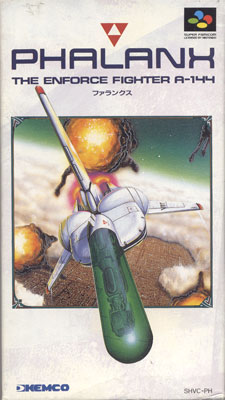
Although my voyage of discovery had certainly been varied and enlightening, I was still falling short when it came to my own personal aim of finding some good old fashioned retro gaming. There had been a couple of places with the odd glass cabinet sporting a dusty cartridge or two in amongst the busty animé figurines in suggestive poses, but nothing that I could yet consider a 'horde'. I had managed to buy a selection of souvenirs from some of the more reputable-looking shops, and had managed to find a couple of places that held my attention with stacks of the latest animé releases (everywhere was going crazy for Evangeleon 1.0), or obscure references to Japanese culture I had remembered from the past, such as a DVD of an old series, some super-deformed retro plush toy or hundreds of airfix-style kits for things I would never have guessed could be marketable in such a form. The only reason I didn't walk away with this Gradius kit was that it was so bulky - it would never have survived the journey back.

It was getting late, and I was a little weary. I had by now moved away from the central area and was getting increasingly far away from the station. Though I was enjoying the experience, I had come up with a blank about my most wanted items, and the feet and arms were getting sore, it was getting dark, and I was having trouble remembering which way I had come from. It was time to give up and head back.

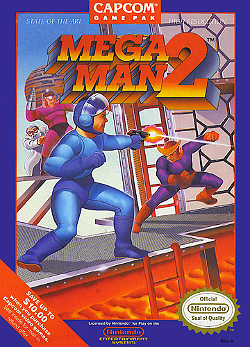
Then, as I walked to the end of the final street I was willing to walk down, I heard over the airwaves a bleepy little tune that I had not heard for perhaps fifteen years. It was the intro theme tune to Mega Man 2 on the Famicom (NES). I spun round to see a little loudspeaker on the corner of an unassuming alleyway. The shop next to it looked like a general electronics store, so it probably wasn't anything to do with that. I headed down the alley. It was a brightly-lit tunnel with some lifts and a set of stairs AND A DIRTY GREAT SIGN WITH A FAMICOM ON IT. I had hit the jackpot. I had by pure chance found Super Potato. Retro gaming heaven.

The sign that adorned the wall - though all in Japanese - was clear. There were several floors to this building, each of them dedicated to a particular games era. Suddenly my weariness and tired legs disappeared. I was fifteen again, and I was bloody well going to get up those steps no matter what.

Neglecting the lift, which may or may not have worked, I went up the stone steps for a few floors before being greeted by a cardboard box half full of identical Super Famicom games. This was the first of the retro floors, dedicated mainly to the Super Famicom and Megadrive games, but also had a good wodge of stuff from even earlier than that. I stood at the entrance to my own personal heaven and wiped the sweat from my brow and the drool from my cheek. One guy behind the counter looked over to me in the universal 'can I help you' style - to which my childish instincts took over and I returned a look of stupefied glee, combined with a double thumbs-up.

I spent a little time looking through the barker ends of what was clearly a deep trio of aisles. There were ancient systems running conversions of games they really shouldn't be able to handle. There were piles of reconditioned Super Famicoms, a pile of unsold Donkey Kong Country 3 games, and a selection of charmingly daft little lego-style ornaments that you built up to create an old-school Mario sprite for your coffee table. After I could resist no more I headed down the central aisle. This was the sight I had thought I would never see - on the left side: a dozen rows of neatly stacked, individually shrink-wrapped Super Famicom cartridges, each with its own little label and barcode. On the right side: a half-dozen rows of perfectly preserved, mint copies of hundreds of Super Famicom games still in their boxes.

I ran a teasing finger down the length of one of the rows, remembering at once a thousand games and their box art, often beautiful or at least representitive but typically replaced with inane, clumsy westernised 'art' when released in the west. (A situation which thankfully rarely occurs these days so I'll step down from my soapbox right there..). I recalled the games that were never made available, and those that I missed because the importers got only a tiny handful and often charged silly money for. Here they were for prices as low as 50 yen - about 25p - although the more desirable items were going for a few thousand.

Resisting the temptation to gather an armful just yet, I turned around and went upstairs. The fourth floor was dedicated to the fifth generation of machines - The N64 (the successor to the Super Famicom), the Playstation, and the Saturn. I immediately headed to the N64 aisle, which had a smaller but no less impressive array of treats, a full side of naked cartridges on the left, and a smaller section on the right with a decent mix of boxed and unboxed carts. Next to the shelves was a pair of rare sights - a TV with an in-built Super Famicom inside it (released only in Japan) playing Mario Kart 64 with a strange, squashed N64 controller dangling temptingly in front of it. Underneath was a pile of reconditioned N64's going dirt cheap (about £15), each individually wrapped in a cellophane bag.

One of them wasn't there though. I am a bit of a fan of Treasure, who are known for their old-school style shooters, pinnacles of their achievements for Nintendo systems are the crazy Go Go! Troublemakers, the hard-as-nails Ikaruga, and the frantic and slick Sin and Punishment. I had all three, but had long hankered for a fourth; Bakaretsu Muteki Bangaioh, a shooter as strange as its name where you can literally fill the screen with chaos if you choose to. This shooter arrived late in the N64 era and there were scant few copies made (about 10,000 for the Japanese market only) before it was translated to the Sega Dreamcast. I had wanted to get it for a while but it was super-rare in the game shops I frequented (the one time I saw it, a second-hand one was going for £150) and now, in the place where it should be, it was missing.

Disappointed, I concentrated on the lines of cartridges, pencilling a few in my mind to have before heading upstairs once more. What I saw upstairs was the icing on the cake - the fifth floor was packed with retro arcade machines, some of which I had not seen for decades. Two particular iconic favourites, Gradius 3 and R-Type, were crammed into the corner next to a chair. A chair made entirely of Famicom games! These people knew how to be opulent!

I spent a good long time filtering out all the 100yen coins from my spare change and pumping them into the slots of several of the games, including one system which must have had a directory of a hundred or more classics all available from a giant scrolling menu. After a moment sampling the majesty of sitting on the Famicom Throne, I headed back downstairs for a buying session.

Starting with the N64 lot, I whipped out a half dozen cheap cartridges from the line-up including Sim City 2000, Bust A Move, Mario Tennis and Densha De Go! - an obscure Taito train simulator for a train driver friend of mine. I was about to pay for them when I noticed some select cartridges and boxes in a glass case on the counter - and one of them was Bangaioh! They were asking silly money for a boxed copy (£8000 yen - about 40 quid) but they also had a cart only copy, at a more reasonable 5500 yen (nearer 27 quid). Since I was definitely not going to be popping round the local Super Potato very often, I decided to stick that on the bill as well. I then headed down to the Super Famicom floor and repeated the process, getting hold of Mario's Picross, Desert Strike, some Soccer game and Parodius Super Deluxe, plus a spare controller. There was so much more that I would have loved to buy, but the journey home was long and there was already a heap of things to play with. I had a fond last look around the shop to take in as much as I could, and then headed downstairs, although not before taking one of the free games they couldn't get rid of in that box at the door.

Stepping out into the night, I felt content. I had come so close to the shop and may have missed it if it wasn't for the little blue bomber, and now I had fulfilled another of my childhood wishes. I got my bearings, and then after visiting a post office to stock up on money, left Akihabara about 7pm for Shinjuku.

I alighted back at the hotel sometime later, packed all the new things away with the existing ones in the case (it just about fit) and then headed out to the Italian again. The spaghetti bolognaise was good, and the mystery dessert, which the waiter tried to convey to me without the necessary English translation turned out to be Crème Brulee, which was also very nice.

At about 8.30 I left the restaurant and instead of heading directly back, wandered nonchalantly along the back streets of Shinjuku for a while. I watched the assorted people enjoying themselves and getting on with their lives, and it hit me that if I was in an unfamiliar place in the UK like this, I'd probably be feeling pretty wary at that moment, but there was no need. I strolled into a late night shop selling all sorts of foodstuffs, pondering whether to take a bag of dried fish treats back with me for my friends to try, but decided not to as it might not be allowed back in blighty.

The country had one final surprise in store for me as I sat in my room watching some final crazy Japanese TV. Almost asleep, I felt a sudden sense of movement - the building was swaying left and right, like I was on top of a piece of wood sat on marbles. I was several floors up, meaning the effect was especially stomach-churning. Regaining my full consciousness, I grabbed the bed frame with both hands until the shaking stopped, and then checking that I wasn't actually dreaming, looked out of the window. No alarms going off, no fires, and nobody running around in circles screaming. I rushed downstairs to the reception desk where the manager was quietly doing paperwork. Confused at his lack of panic I gasped 'there's an earthquake!' at him. 'Has there been?', was his improbable response, to which I could do little more than turn around and with slight embarrassment head back up the stairs through the still-swinging door.

A few minutes later, the news on the TV was interrupted by an item about a magnitude 5 earthquake occurring on a map of Japan 50 miles or so northwest of Shinjuku, showing a shock radius that had dropped to about 2 by the point it hit where I was. Then, they just calmly went on with their other news like it was just some other item. I guess rumbles such as these are pretty common when you live on the intersection of 3 tectonic plates.

I tried to put the experience out of my mind and get some sleep. It was 10pm, and tomorrow I would be heading home on a day that would last 33 hours.

Japan 22 : Fancyplants' Big Day Out


It was time to leave Fujikawaguchi. I was not in any great rush to leave the pure, fresh air of the mountains, but I was becoming a little short on cash, so after getting a shower and wishing the people in the hostel good bye, I left on foot in the direction of the train station with the intention of calling at the local post office ATM on the way. It was closed when I arrived, so after getting a little bit of nosh at the 7-Eleven over the road I sat outside until the cashier dutifully opened the doors for me. Spare folding would be very useful to me today.

Back at the station, the next train out would be a little while, so there was a little time to peruse through the in-station tourist shop and buy a few souvenirs. The trains outside were lined up on their tracks, painted with crazy cartoon mountains to give their passengers a garish and slightly embarrassing appearance as they glided through the picturesque countryside. I paid for a ticket and boarded mine, a definite tourist train- although it was a little past its best, the on-board TV screen had long since been shaken loose of its connection to the looping video of the mountain and its sights, and as the train gathered pace, each wobble and bump on the privately-owned track randomised the image.

So I concentrated on the view outside, the steadily shrinking Mt Fuji to the south, and the increasing amount of structure and form to the landscape as we headed east and the forests vistas were replaced with built-up areas once more. I switched trains at Otsuki to a JR-owned line, which allowed me to make use of the last day of my Japan Rail pass. My destination would be the city of Mitaka, home of countless Sakura trees and most notably, the Studio Ghibli Museum, a building dedicated to some of the finest anime movies of all; a giant exhibit of film chronology mixed with adventure playground, designed by Hayao Miyazaki and Isao Takahata, veteran directors and artists responsible for most of the output in the firm's 20-plus year history. It's somewhere any animé fan should visit once in their lifetime, and definitely so if they ever find themselves in Japan.

I had my ticket ready, or rather a voucher for the ticket, which I had got myself a couple of months previous from a place called MyBus, the designated ticket provider for the UK. That was a little weird. The London number I had called was connected through and I found myself being greeted in Japanese. This was my first ever experience of the language and suddenly I was tongue-tied. Garbling some confused sentence not out of place in Boris Johnsons' repertoire, the lady at the other side thankfully switched to English and we carried on. She apparently had a lot of reactions like that.

I had planned my entire trip around the ticket in fact, so that I could use it at the end of my journey. Oh yes, I had every intention of leaving the museum with a travel fee-incurring amount of tat to bring home with me. However, I didn't get off at the Mitaka stop. I carried on until hitting the Yamanote line at Shinjuku. Good old Yamanote line - how I had missed thee. The last time I had seen it was on the third day of the trip, leaving Ueno on my first Shinkansen ride to Sendai. It was almost like coming home.

I had a room booked in Shinjuku, but it was at a hotel quite a way from the station and getting there would take a while, and also, I might not be allowed in just yet. Instead, I compromised by finding a spare locker in Shinjuku station, sticking both my bags into it (sans a couple of maps and the all important ticket-voucher) and headed back on the same line to Mitaka.

Arriving at the station, the map pointed to a long, straight dual carriageway. In between the opposite lanes of the road was a small ditch through which a gentle stream flowed, the swaying branches of a hundred or more Sakura trees - now in full bloom - creating a pleasant, dappled canopy softening the hard, straight lines of the road. At the head of the long road was a little sign with a Totoro on top, diligently pointing the way to the museum.

I strolled down the road, taking in the pleasant sights; word was that Miyazaki chose Mitaka because of its greater prevalence of natural open spaces than most other wards in central Tokyo, being someone who infinitely prefers a natural scene to look out of the window at as he works at his desk. Even the tarmac on the road to the museum was infused with little specks which sparkled in the sunlight.

The museum emerged slowly from its hideaway behind a group of trees and bushes, the first thing you see is the large, faux ticket booth placed at the gated entrance area. A huge Totoro sat behind the window and provided rare photo opportunities. I stayed there for a short while as gaggles of families passed by, the children (and some of the parents) squealing and pointing excitedly at the booth and posing for photos.

I carried on down the path, taking me along the side of the museum building, a large, chunky sand-coloured structure a few stories high, styled similarly to some of the buildings in Miyazaki's films with smoothed edges and small stained glass windows. From the pathway, a wrought-iron spiral staircase protruded from the upper floor of the building giving access to the roof. Little more about the innards of the building was obvious from the outside, and I had little choice but to work my way through the outer gardens and join the gaggle of excited children and parents, standing in a large queue outside talking excitedly with each other about the experience ahead.

Eventually, I made it to the entrance, where my voucher was swapped for a special museum ticket, a kind of souvenir itself, being a few cells of one of the Ghibli films, encased in a little cardboard frame. Since it showed a few frames from Princess Mononoke, it now sits proudly next to my Ashitaka and San Cominica figures.

There is a slight picture break here; the reason for this is that the museum staff were very vigilant on anyone taking pictures of the inside of the building, stating that Miyazaki wishes people to remember it in their minds and hearts. Out of respect for his wishes, I'll be brief with the contents of the museum.

The museum was designed largely by Miyazaki himself, and many little references to films and other works pepper the museum. It's designed with a childlike exploration in mind, with multiple ways to get up through the different floors from the bottom to the top. The idea is for the kids to go off and crawl through holes and go up stairs and generally lark about like children, while the parents and big kids such as myself stroll through the rooms and exhibits.

Each ticket provides its owner with a single viewing of an exclusive Ghibli Museum Short Film at the in-house Saturn Theatre screening room on the ground floor, although the time and day you go will determine which you see, and you won't know until you get there. I danced about like the other kids in the queue with fingers crossed it would be 'The Day I Harvested a Star', but was more than happy to get to see Koro's Big Day Out, a lovely little flick about a puppy who escapes from his young owner and gets into all sorts of scrapes as the panic-stricken pup tries to find its way back, occasionally helped by well-meaning strangers along the way. Like many of their films, it was a little cute, a little funny, and a little scary, and both parents and children alike spent the entire film with big goofy smiles on their faces.

Slowly I made my way from the bottom to the top, each floor packed with squealing, running children and cooing adults. There was a section of exhibits on the film processes, one made up like Miyazaki's typically cluttered artists' rooms, a book library with titles from all over the world picked out specially by Miyazaki because of their imaginative stories. There were also rooms that were devoted to installations by other artists the world over; there had previously been exhibits by Pixar and Aardman Animations, and this time it was a collection of works based on Tolstoy's picture book version of the old-fashioned fairy-tale The 3 Bears.

On the top floor was the main draw if you were 7 or under: a massive furry catbus that took up most of the room, crawling with a constantly rotated group of children. I had heard about this before, but was not expecting the gaggle of parents, museum staff and huge numbers of kids. I had joked before leaving for Japan that I was definitely going to have myself photographed inside the catbus, but there was going to be no way, the staff had a very rigid age limit set and short of setting the fire alarm off there was nothing I could do after my third beg to the alpha staff member.

By now, the museum was operating at capacity. I went outside to the balconies and visited the Straw Hat Cafe, which was hugely busy. They were serving slice after slice of cartoon-style cakes and ice creams and hot dogs, and finally after a lot of waiting I managed to get a large strawberry cream cake and a seat and gorged on it for a while. The influx of people was relentless and the exit which I could see below me was populated by parents in two minds whether to step through the exit, often with children trying to drag them the other way for a final look round. The result - it was getting seriously packed.

After finishing off my cake, I headed up those wrought iron spiral steps to the top, where an enormous robot from Laputa stood in the centre of a rooftop garden, waiting for small children to come along to pose for pictures (the no cameras rule didn't apply outside). Behind him was a small area for parents to get their breath back and walk in peace amongst the bamboo and grasses, although it was clear that a few more months would be needed before it recovered from the winter.

There was only one thing left to do, and that was head to the souvenir shop. 'Mamma Aiuto' was packed with official Ghibli stuff. Everything from little badges to enormous plushes (especially of the perennial Totoro's) and plenty in between - artbooks, DVD's, soundtracks, loads of soft toys, fragile looking and expensive glasses, cutlery and dinner sets, and some very desirable but very pricey (30,000 yen or more - about £150) framed cell and background scenes from the films. I sat for a little while after perusing what was on offer on the helpfully-positioned benches outside, debating about one of the cells I had seen (a beautiful sunset scene from Whisper of the Heart going for about 37,000 yen) and finally coming down on 'no' since it would never survive the trip, and its not something you can fold (and its really expensive).

Decision time came when an elderly lady made some subtle glances in my direction that she wanted my place on the crowded seat. With only a cursory thought towards how I was going to transport anything else back with me, I launched back into the shop and bought myself some little badges (little Totoros and one of Miyazaki in his self-imposed characture as a pig) some DVD's (including the Short Films collection and the Ghibli Museum DVD with the Russian animator Yuri Norstein), a couple of soundtracks I was missing, the official museum book, and the Laputa artbook, a large high-quality, book containing stills from the film as well as all sorts of concept art as well - which I had spent a long time searching for in the UK without success. Since they were there I also got the accompanying books for Koro, Mei and the Kittenbus and The Day I harvested a Star, since they were all in the same style and I couldn't decide between them. About 20,000 yen all in. I must be mad.

Heaving it outside, it was impractical to try and work my way round the museum any more since some of it would be almost certainly damaged by the knees and elbows of a thousand or more visitors. I hesitantly crossed the threshold of the entrance, a very one-way road as explained by the staff member there, and my visit was over.


Behind the museum is the large Inokashira Park, and rather than going back via the road, I strolled through the park in the warm April sun. It was almost as crowded as the museum, with gravel tracks around squares of grassed land covered with people sitting and chatting in the sun, jogging round or playing football. I took a breather on a park bench and watched the world go by for a while and it occurred to me for the first time that my holiday was nearly at a close.

Back at the station, I was a little annoyed to see a branded Ghibli bus waiting to transport passengers down to the museum, although on reflection my trip there was more enjoyable by foot (wouldn't have minded it taking me back though). I boarded my train to Shinjuku and it hit me just what I had left myself to do. Now I had three bulky Mamma Aiuto bags to go with my two backpacks and another large plastic bag containing the Mt Fuji choccy. Instead of taking them all at once, I figured I should find my hotel first and come back for half of it.

Shinjuku station was large and busy - in fact it is officially the busiest in Japan, and the evening had just begun, meaning revellers were heading out and tired office staff were coming back. I made a stab at the direction of the hotel, my map being a typical JTB map that is sort of right but also sort of not. I passed through some of Shinjuku before finding myself back at the station, this time at the east side, having passed three separate people pleasantly trying to sell me massages and 'Big American Man' sex sessions (yes, I declined). Shinjuku station happily had a tourist information office, a cramped one-person booth which I squeezed into and asked the thankfully English speaking person for directions. The described some landmarks to work by and some street names (some of the larger shops in Japan often have enormous cube-shaped advertising boards on their roofs) and sent me on my way.

Somehow, and I don't fully know even now, I managed to work through the shopping complexes and wide roads and their crossing areas (which always had a million people trying to cross from each side), past glittering windows advertising cheap, hi-tech gadgetry and displaying posters of various western icons (Timberlake, Beckham etc.). The route took me out of that district and into a slightly different one, where the retail outfits were replaced by red neon and lots of X's. Fortunately they passed by and finally up a road my hotel. I checked in, put my bags down, and retraced my steps to the station to hulk back my remaining possessions.

After getting myself some food at a nearby Italian restaurant, I did a little bit of photo transferring and headed to bed, tired and aching. Tomorrow was my final full day - a day which would be spent at least partially getting more stuff for gifts for folks back home. I would also have to try and find another suitcase, into which this growing pile of tat would have to go. For now, I just watched some telly until my eyes got heavy.