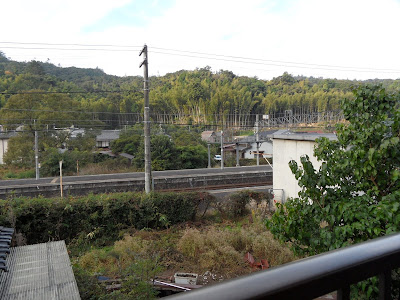
I woke not long after dawn, my toes feeling the cool air of the morning as they poked out from under the duvet. Outside, a train clattered by. I hadn't figured the night before, but the Ryokan was only a few yards from the tracks. I considered lazing in the returning silence of a beautiful morning as the sun gently peeked out from behind the hills, but eventually I started my day.
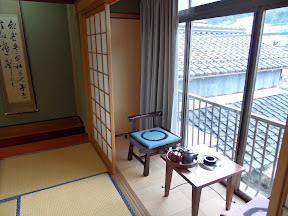
But that didn't matter; for the first time that I could remember, I had woken up in a traditional Japanese room, and could sip green tea on the veranda, looking out onto a (mostly) peaceful scene of nature. The closest I had got previously was maybe Aso (which wasn't very traditional, or the Suzuki Ryokan on my first ever day in Japan, which was slap in the middle of Tokyo. No, this one was the new winner.
I got some boiling water from downstairs and made some tea, and sat savouring the moment for as long as I dared. There was a wintry cloud to my exhaled air, and I felt the coldness on my bare legs and arms that could not be covered by my night clothes, but it only helped to heighten my senses. For some reason I wished I could have stayed on that balcony forever looking out onto the quiet world beyond.
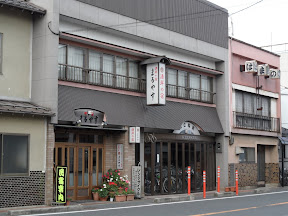
Hotel Review: Amanohashidate Ryokan Maruyasu (6825 yen/night, 1 night)As Ryokan go, this is the most beautiful example I have found so far, and just the thing if you want to wake up to a traditional oriental view. Even at the price I paid (the cheapest room there), it's still a pretty good bargain considering the authenticity and location. The owners don't speak much English, but they are very enthusiastic and will try to help if they can. Unfortunately no Internet, but I didn't miss it for a day. Ask about the onsen to get a voucher.
7/10 But eventually I had to leave, and quite early too if I was going to take advantage of my surroundings. The flyer mentioned several areas - Monju where I was at the moment, and Fuchu to the north, connected by the thin
Amanohashidate sandbar heading north-south. There was also
Miyazu and Yura to the east, but visiting all these was not practical in a single day, so they were left for this time. Regardless, I would need to be returning to the station before the evening descended so I could return to Kyoto, where I was staying for the night. Based on last night's journey, I would need to leave 2-3 hours for the journey.
So I checked out of the ryokan, and asked if I may leave my large backpack inside the door to pick up when I returned. They happily heaved it into the back room for me and I headed out. The man road was quiet, it seemed that I was one of the first to wake that saturday morning, but it would no doubt get busy. As the morning sun began to peek over the hills, I got going.
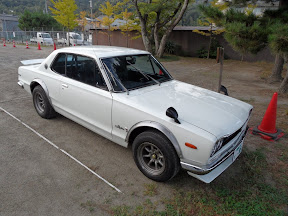
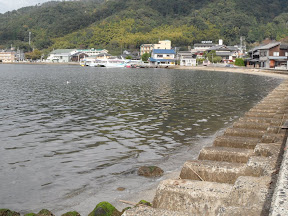
Using the map as a guide I headed briefly to the Monjudo Buddhist temple, although I got a little distracted by a mint first generation
Skyline GT-R sat on its own in a massive car park looking out to sea. I'm not much of a car fan, and Japan can't boast many classic looking cars, but this one had the looks.
After a brief taster of the Aso sea, into which a
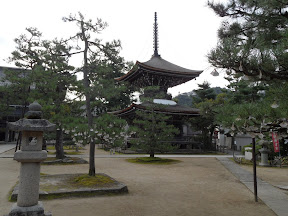
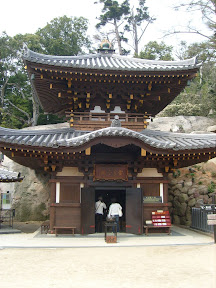
group of fishermen had waded in and were trying to net themselves a bit of breakfast, I found the temple poking through the trees. A picturesque sight; several carefully presented buildings, and a beautiful two-storey pagoda were dotted around a neatly combed sandy area. Large-needled fir trees blossomed with paper fans and the place was defined by its imposing
Sanmon gate at the far end.
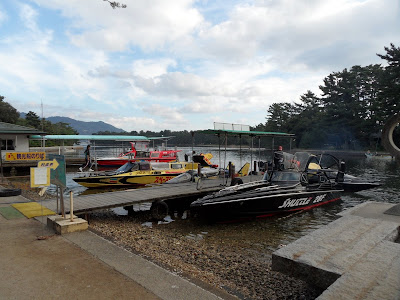
Just out the other side, some early risers had taken over the docks, and were starting to fire up their thunderbird-style speedboats. With a space theme, each boat looked as if it was a dream come true to some enthusiasts who had never grown up. I smiled and gave them a wave and headed over the bridge to the start of the sandbar. Even the bridge managed to give me some pretty gorgeous shots of the beautiful surroundings I was in, but there was better to come.
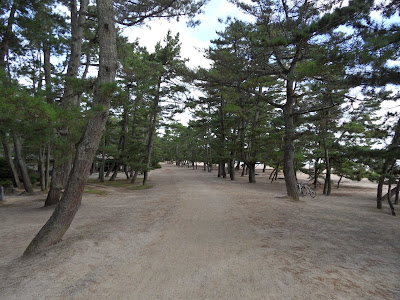
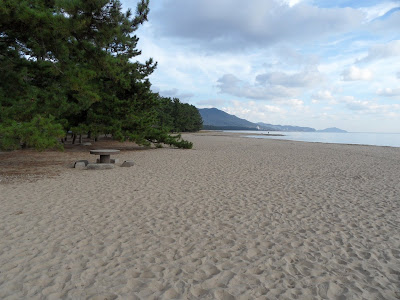
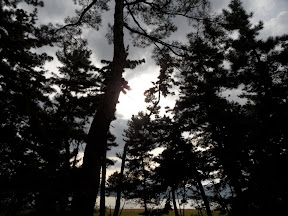
The sandbar provides the tourist with two options; either they can walk under a pleasant canopy of trees along a path that, when lit up at night must afford one of the most romantic experiences a couple might be able to get in the area. Alternatively, if the sun is out (which it was) you could also head out onto the sands and walk along the shore. I chose to do a bit of both.
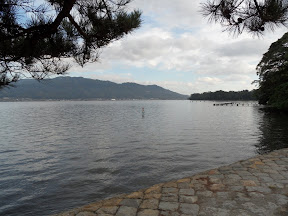
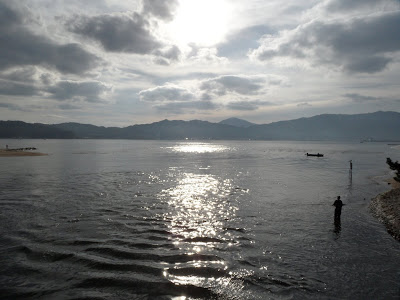
The sun was breaking through the clouds and shining on the sea, the waves gently lapping at the shore. Small ships were in the water in the distance, and fishermen were stood contemplating their day as their floats sat bobbing and catching the sunlight. Now and then the inner pathway forked as the trees parted and revealed pristine sands to walk down, easily emptying the mind of stresses and troubles of life. Truly this was one of the three great views.
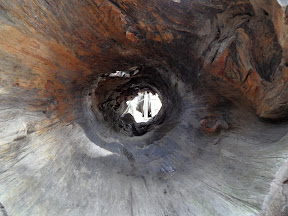
Now and then, evidence of the age of the sandbank could be seen. Small, ancient-looking shrines were placed at occasional intervals along it's length, and some of the oldest trees, long since unable to support themselves through old age, had become part of a tripod, the people of the land conserving them for as long as possible as they had become part of the spirit of the place. Some especially large ones had been
fenced off as a mark of respect, their ancient and withered trunks given protective plastic caps to stop rot and preserve their life for as long as possible;
it seemed a fruitless exercise destined for eventual failure through a westerners' eyes, but the eastern notions of respect for nature and spiritual embodiment had as much to do with it as nostalgia and aesthetics.
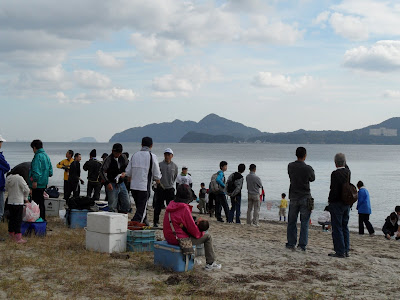
Half way along, I saw through the trees a group of people gathering at the shore. They were looking out to sea, where a
small fishing boat was being gently rocked on the waves. Men, women and children, all seemingly from one or both sides of the sandbar, had come together to wait for something. Here and there, large white boxes had been set on the ground.
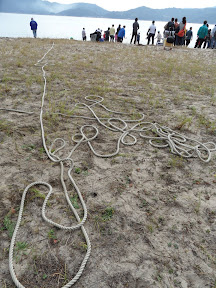
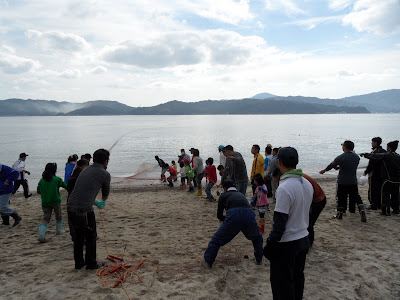
Then I noticed the ropes. The crowd was beginning to arrange itself into two groups, gathering around one of two ropes that disappeared into the water. Looking out to sea, it was actually two ends of the same rope that made a giant arc. Buoys were attached at regular intervals to keep it afloat. They were about to land a catch of fish.
I stayed quietly back for a while, but my curiosity for a decent shot got the better of me and I emerged from the trees. By this point, a dual tug o' war was about to start against the force of the current and a hundred little fishy tales that had just realised they'd chosen the wrong place to swim that morning.
By this point I was at the shoreline, trying to see if I could see any writhing bodies in the ever shrinking net. It was still too far out, so in a sudden rush of community-mindedness, I tapped a random guy at the back of one of the tug teams, and asked if I might lend a hand. Incredibly, he said yes to this stranger, and made room for me.
I pulled with all my might, and even though the sand was sapping my energy and the rope was wet and slippy, I'd like to think I lent a useful hand, despite falling over at one point. I lent my camera to one of the guys at the side, who took a few pictures as I dug my feet in.
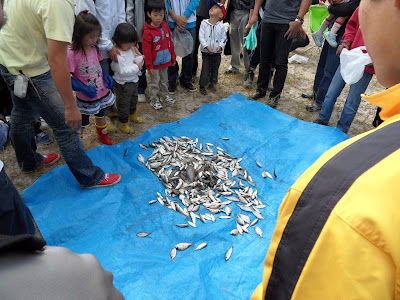
Eventually, the net was dragged completely ashore. Compared to the effort involved, the actual haul was quite small and the fish were pretty tiny. Still, a catch was a catch, and the crowd gathered around as an appointed mediator announced how it would all be shared between everyone. I stayed around and chatted briefly with my fellow tuggers, and moved on.
The sandbar ran out a half mile or so later, during which I had been treated to some hugely picturesque and beautiful sights, in the way that a combination of large trees, sandy beaches, rolling waves and a panoramic blue sky tends to do when you can fit them all in the same picture at once. The dirt trail turned into a paved walkway, and the view moved from the east side to the west, opening up the sights of Fuchu beyond.
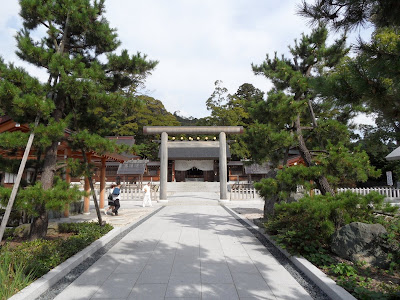
Fuchu is a town that seems built primarily around the needs of the tourist. The coastline is home to a pleasantly twee ferry terminal, and most of the buildings are some sort of souvenir shop. After spending a little while working my way into the town, I hit the impossibly neat and tidy shrine of Motoise Konojinja. Not a blade of grass nor a pine needle was out of place as I walked up the perfectly manicured pathway to the main gate.
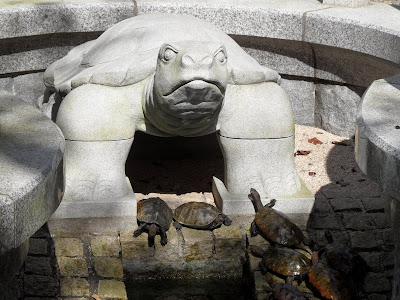
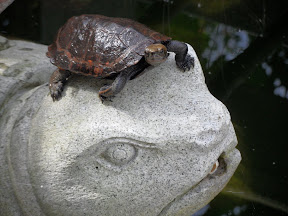
Paying my respects, I headed out of the side exit, which took me on a gentle walk around the back gardens of several Fuchu residents, which included the occasional statue, and a couple of turtle pools - a large turtle statue crawling with real ones, some of which were trying to climb up to the head for a bit of a view. The path was headed in the direction I was trying to generally go; that of the cable car entrance to the Kasamatsu park
on the hillside.
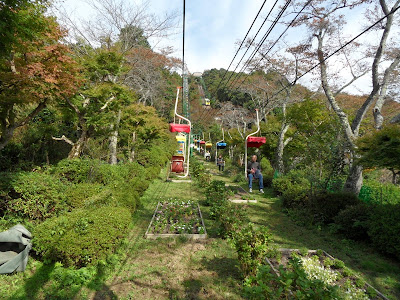
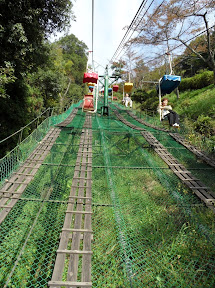
Passing a couple more souvenir shops I found myself at the lift entrance. There are two options for travellers - either you can wait for the cable car to give you a leisurely journey up the hill, or if the queues are a bit big, take the cheaper, faster option of the ropeway - a constantly moving set of chairs similar to a ski lift that can take you to the top, but you have to be quick when you get there, or you'll be back at the bottom again.
Since the place was busying up a bit, and I had experience of ropeways before, I elected to take the cheaper option. A ticket to get you up there and back down again costs 600yen, which is pretty reasonable.
After re-acquainting myself with the wobbliness, I sat back and enjoyed the silent ride as the gradient steepened and the ground fell away. The ropeway was cut into the hillside, but they tried to keep as much vegetation as possible to the side and below so you didn't feel too guilty about the swathe cut into the nature. It was a pleasant ride, although the pleasant breeze at the top was a few degrees cooler than down in the valley.
I disembarked from my seat as elegantly as I could and padded up the steps to the plateau. Off to the left was a trail to the Nariaiji Temple further up the hill, which from the look of the nearby
billboard map, seemed to be a pretty long walk. In the opposite direction looked a much better option: a viewing platform and a cafe.
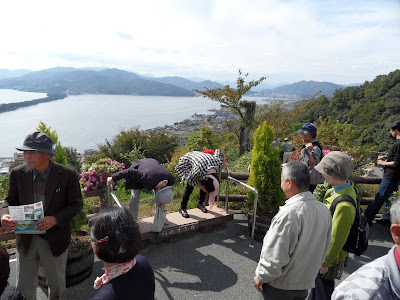
A smattering of morning sightseers were sat at tables and looking out to the shores below, some were sat enjoying their drinks in the sun, others were throwing tokens through a ring that had been set up on a tall platform. Still more were standing on platforms with their heads between their legs.
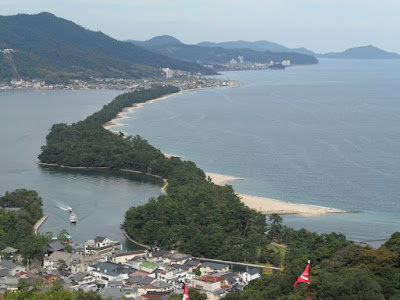
My guide explained all - it is a tradition when coming up here to look through your legs so that the sandbar below looks as if it were a bridge to the heavens. People young and old - some more steady on their feet than others - were lining up to do this, usually with a camera pointed out there for additional distraction. Obviously,
I took my turn.
I admired the view before me for a while, bought a postcard
with the Amanohashidate sandbar on it, and wrote it at a spare table whilst sipping on some orange juice with a blob of ice cream in it. I'd send it off to my parents the next time I was passing a post office. As the place got busy with tribes of pensioners, I made my exit. I considered the trail to the temple, but there was still the other end to get back to yet, and after yesterday, I didn't trust the approximate length of the trail on the map.
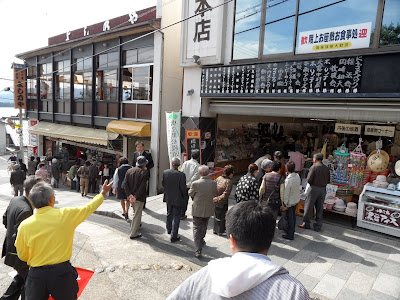
Back at valley level, it was hitting noon. I looked through some of the shops at the base of the hill, many of which were selling local stuff, such as these dried puffa fish, complete with questionable stick-on googly eyes. I took the opportunity to get some beef ramen and vegetables in a nearby cafe, where the Koi from the pool outside were allowed to swim in through channels in the floor and watch you eat.
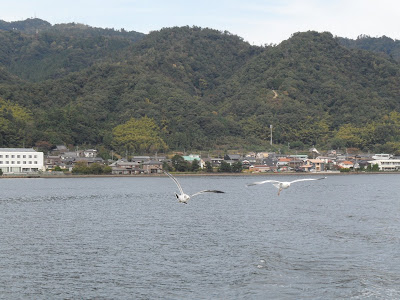
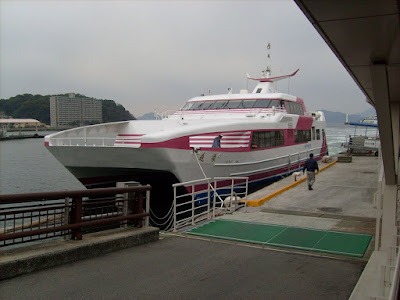
As I was passing the port, the 12:15 ferry was about to set off, so instead of taking an hour or so back on the sandbar, I spent a thousand taking the quicker route. The boat was ship-shape but the windows had been several months without a clean, and were streaked too much to get a decent picture, so like most of the passengers, I went out to the back of the boat where there was a small seating area. One man was throwing snacks out of the back of the boat, and a small flock of seagulls were following us trying to catch the pieces in the air.
The trip only took fifteen minutes or so, so I headed to the Monju ropeway. By this time, things were busying up; a neighbouring car park was almost full, and hoards of people lined the streets heading either to or from the 'View Land' area, halfway up the Monju hill.
As before, there was a lift and a ropeway, and as before, the lift was packed. I was told there would be a 20 minute wait, so the ropeway it would be again.
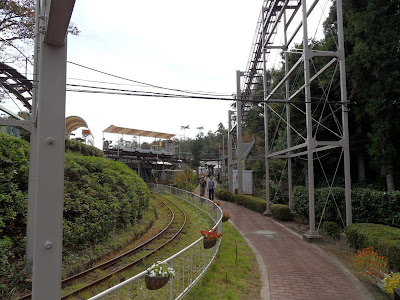
At the top, I was surprised to find myself in the middle of a mini-amusement park. A miniature rollercoaster snaked around the immediate vicinity, overflowing over the side of the hill, exposing the occupants to the steep drop below.
A kiddies
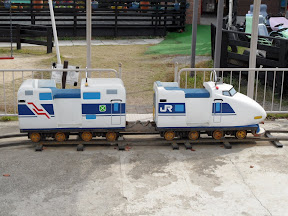
helicopter ride had been worked into the middle of it, as close as could be considered safe without one becoming tangled with the other. At the end, a tiny JR train was sat waiting for a driver to get on board and send it round it's little oval track (it played
'I've been working on the railroad' when one did), while the teens could get into a go-kart and head round a mini track. They even managed to crowbar a ferris wheel in for good measure.
I really wasn't sure what to make of it all; I guess my first reaction was disappointment that the side of the hill in such a picturesque place had been covered with ugly metal structures, but better up here than down in the valley, and the kids aren't going to be satisfied with a long stretch of trees and sand I suppose.
Right at the back of the fairground was a sign heading upwards into the wilderness beyond, which appeared to be some sort of nature trail. Since I was too big for the rides, it sounded like the only thing to do, so I began to head up. The weathered 'beware, snake' sign was a bit superfluous, since a few yards up, the trail ended with overgrown shrubbery (clearly not so popular) and a rickety old seat, which since I was up here now, I used to take a rest.
Fortunately, the place wasn't completely ruined; the designers had built an observation deck in the middle of the fairground, and from it you could get a pretty decent view of the place below, with barely a human footprint to be seen. A pair of
red kites teased me by coming into close range right when my camera wasn't ready for them, but I did manage to get some beautiful pictures.
Eventually I headed back down sometime around half one, raided the convenience store for a bit more grub, and got a bit more cash out of the post office ATM, which was available even though the rest of it was shut. I got my bag back, and said goodbye to the millionaires, and headed back to the station, pausing briefly at a few souvenir shops along the way, where my large backpack caused the patrons to eye me with fear for their newly-stocked displays of breakable goods. Fortunately I negotiated it well and got a green tea mug and one of those lucky cats.
The next train to Kyoto was an hour away, so I spent it looking through the leaflets in the station, and shifting my things around in my bags so all my newly bought gifts had a chance at not being crushed. I had to swap trains at Fukuchiyama, and then it was back to Kyoto, the initially empty train steadily filling up as it reached each station on the way. The rolling hills and pleasant scenery slowly disappeared in favour of large, grey buildings and neon signs, and eventually as evening began to set in, I arrived back at Kyoto.
The post office was right outside the station, and was open until 9pm, so I took the opportunity to send off the postcard, and then I headed in the direction of my dwellings for the night.
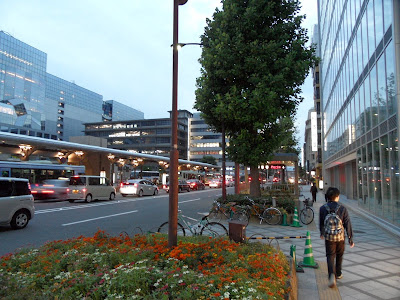
The crowds in Kyoto were massive. Not since my first day in Tokyo had I managed to be bumped and battered by so many people at once. The main streets were packed with evening shoppers and fashionable young things trying to get to everywhere at the same time. Eventually, I found the Hana Hostel, down one of the side streets off the main road. It was a proper city hostel, people coming and going between rooms, and a bustly sort of feel to it. I got my room on the ground floor and dumped my bags, swapped into some less stinky clothes and in my bare feet (because I had no clean socks left) I headed back to reception to find the washing machine.
Unusually, it was just outside the front door, nearly on the street. A washer and dryer one stacked on the other, out in the open air; anywhere in the UK someone would have been to the toilet in it, but here it just seemed to be accepted and normal. 300yen got me a wash and spin dry, and then I got myself a shower.
 |
As expected, the lounge area was inhabited by travellers from all over. A trio of Israeli, Thai and Italian guys were chatting in the kitchen together comparing notes, an American bloke and his teenage daughter were planning their next days travelling at the dinner table, and a couple of Frenchies were sat at the computers in the corner, uploading film footage somewhere. They seemed as if they were doing a media project for university or something; wish I'd had such ideas during my final year. I sat and got talking with one or two of them and sipped some green tea, eventually the film-makers left and let me use up their last pre-paid minutes on the computer to do some quick emailing.
The
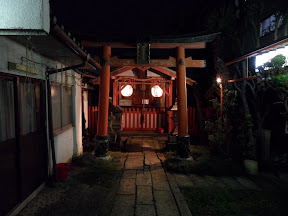
first time I came to Kyoto, I was feeling dog rough, but managed to get a reasonable days worth of travel around the city, although one place that was notably ignored was the Gion district, a section to the East of the city known for it's rare sightings of Geisha and it's traditional streets and neighbourhoods. I had chosen the Hana hostel partly because it was close to the area. Since there was an hour or so of the night left, I headed out in the cool air and the emptying streets, and did a lap of the neighbourhood, although I saw little of note aside from a load of closed, darkened temples. Tomorrow would be a better day.
I headed back and munched a KitKat in bed, and planned what to do tomorrow.