Japan 16 : Don't Look Down


Now I had finally got to Shikoku Island, it was time to work out exactly what to do there. My expectations of the island were basically 'a bit more of Japan', which was broadly true, although there seemed to be a slight change in temperature and overall 'feel' of the place. If you stopped to try to get hold of a concrete example of the difference around you, it was near imperceptible, but it did feel like another nation. The most tangible difference was that English was very much a second-rate language here, as if the islanders had less use for it because the ebb and flow of tourists rarely crossed the waters to come see them.
No matter; I considered my options while flicking through my book. Shikoku (Shi-Koku, meaning four provinces - referring to the prefectures it is split into, Kagawa, Kochi, Ehime and Tokushima) is similar to Hokkaido in that it contains a few major cities surrounded by large expanses of rural and forested areas. Despite a large portion of island to work at, comparable in size to Western Honshu, I had only allowed for three days on the island - and one of them was yesterday. This left me with a Hokkaido-like rush on, which I didn't want to do.

Currently in Matsuyama (Ehime) on the west coast, I was due to stop overnight in Takamatsu on the east (Tokushima) side of the island by the end of the day. That left two options with the intervening hours. Either I could spend a day on the trains, taking the anticlockwise route around the south coast of the island which would include places like Uwajima, (which has a museum dedicated to sex, and who doesn't want to see that?), several famous spas (a Japanese tourist must-do which I had yet to try) and the apparently beautiful sea views round Yawatahama and Susaki. My other option was to head clockwise round the north coast on a less scenic or interesting route but on a natural collision course with Takamatsu.
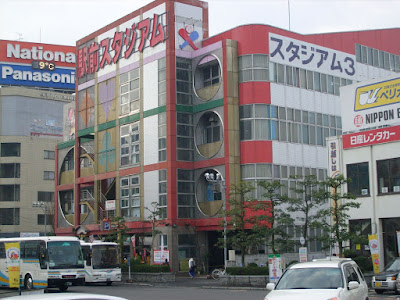
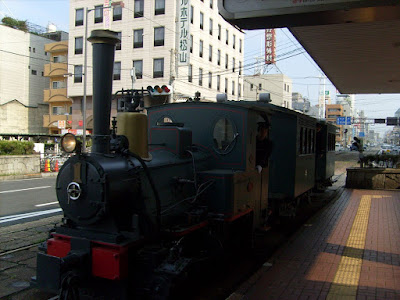
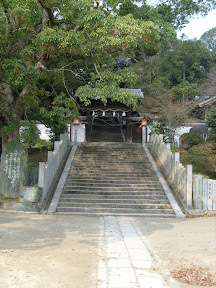
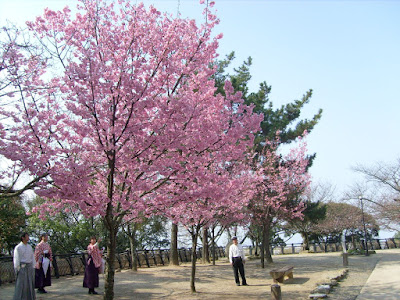
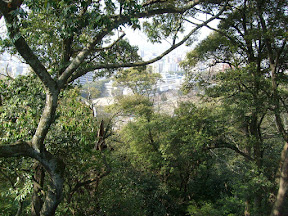
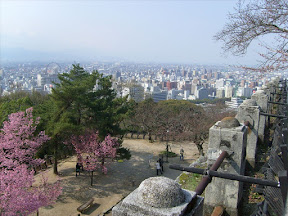
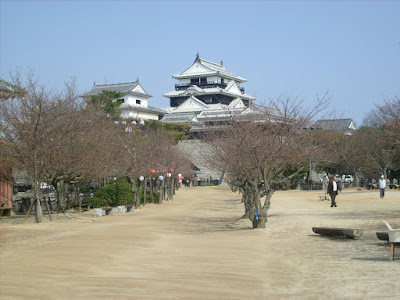
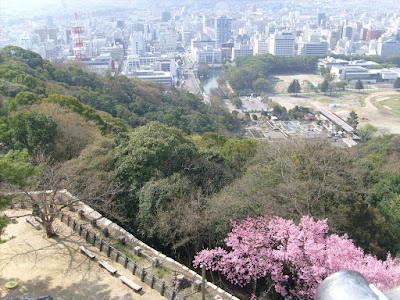
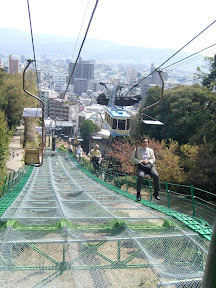
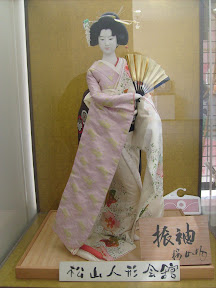
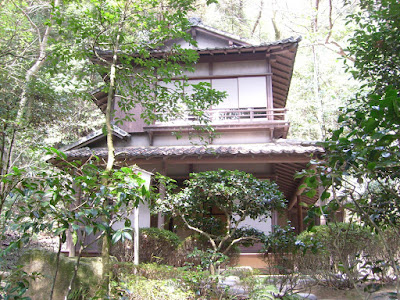
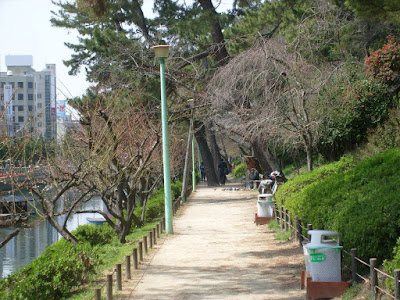
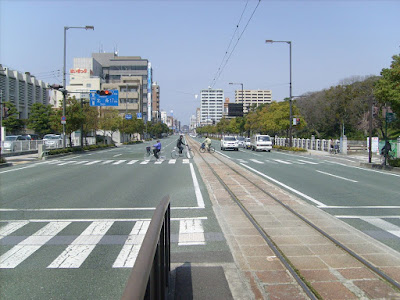
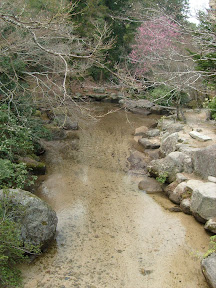
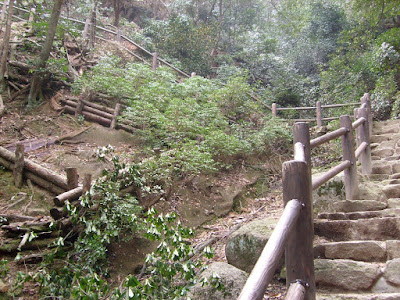
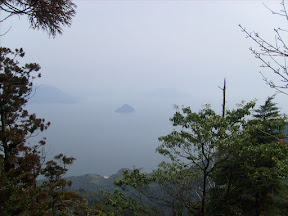
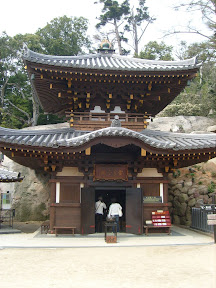
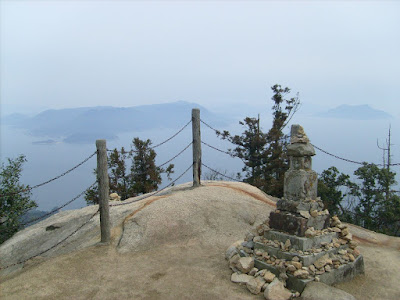
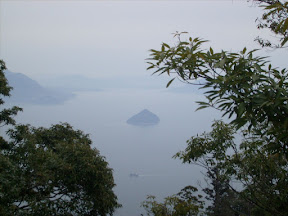
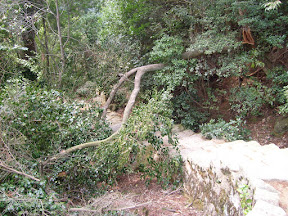
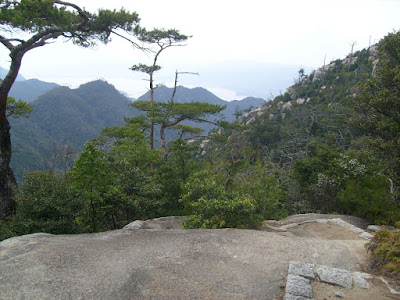
Perhaps surprisingly, I decided on the latter. This was because taking the south route was probably going to be too long to take in a single day, which means I wouldn't be able to make any stops and look around. It's a route that needs at least 3 or 4 days to get around on its own, and I didn't have that luxury. Instead, I would look to see what Matsuyama would have to offer (there is plenty, as shown in the piccies here) and then head to Takamatsu near the end of the day.

I woke at about 6, checking out before 8am. Sticking both bags into the lockers at Matsuyama Station, I was free to tramp around Matsuyama for about 6 hours before needing to head back, the train journey worked out at about 3 hours, so I would try to make it before darkness fell. My Takamatsu map showed the hotel as being some way from the station, and taking into account the innacuracy of these things, there would need to be a bit of buffer room at the other end.
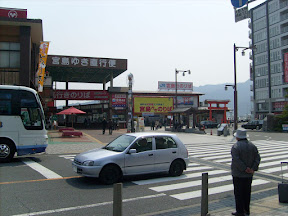
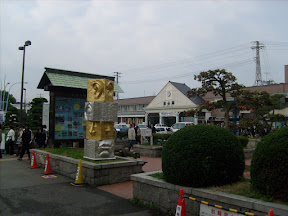
Just across the road from the station is a tram station, filling up slowly with the local office-goers. Exiting from the thin underpass, my worries about getting around were strengthened when the journeys board had no English on it at all. Eventually, by deducing what the symbols meant and the colour coding, I plumped for #5 of the available lines, and was pleased when the intermediate stops (which were translated into English) came and went in the right order.
I got off in the centre of the city at the Okaido stop. It seemed to be the closest one to the main attraction - Matsuyama Castle. Situated in the centre of Shiroyama Park, (a steep climb to the plateau on top of Mount Katsuyama), it is accessed at the east side via a steeply inclined path, or if you're feeling flushed, the twin transports of a ropeway and chairlift are available.
Starting up some pretty important looking steps (the steps seemed like they were enormous after yesterdays Miyajima trek and I was sick of them!), I was disappointed that it wasn't the entrance to the place I was looking for. Instead, it was the Shinonome-Jinja shrine at the base of the hill. Deflated slightly at the outlay of stair-climbing-to-reward ratio, I took a chance and headed out the path round the back, and was pleased to see both the ropeway and chairlift in front of me over a pathway that led promisingly upwards. Deciding that I felt well enough to make it up unaided, I carried on using the manual method rather than looking for the entrance to the girly easy way up.

Even though the hill was steep, it was a very nice trail to take. The city scenes I was looking at a few minutes before had been completely replaced by woodland canopies that filtered the morning sun pleasingly. The hugely recognisable curved castle walls began to appear before long, and a few ladies in traditional hakama Japanese dress unwittingly led me to the outer castle entrance.

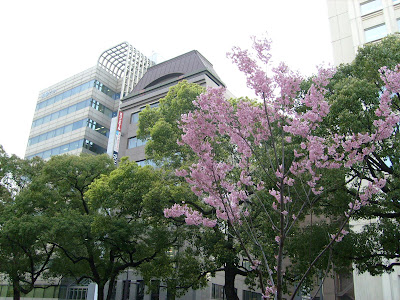
Matsuyama Castle, like many others is surrounded by successive inner walls, each made from tightly interlocking stones curving from the base like an inverse buttress. The inner areas accessible by a single gate which is often large and imposing. This was more true here than many others, just one of the areas being a very wide open plateau containing seats, Sakura trees in full bloom (the first ones I'd seen properly open), and a couple of shops poised to take advantage of those who came up here for the fantastic views of what was now clearly a very big city.

After crossing the attendants palm with silver (500 yen) and heading through more gates, I arrived eventually at the innermost courtyards where some other tourists suddenly appeared. Shoes had to come off and go into a plastic bag, but this time they were replaced by a pair of flip-flops, although only after a long wait as the shoe guy found some 'outsize' ones for western feet.

Matsuyama castle is narrow and cramped, with several steep staircases to go up and down in. This was a problem in flip flops, and lets just say I am glad there were handrails everywhere. Getting to the top of the castle is definitely something to see; the views were more gorgeous still than those outside and the castle itself is full of artefacts with thankfully English (ish) signs to tell you all about them. You could even take a camera in.
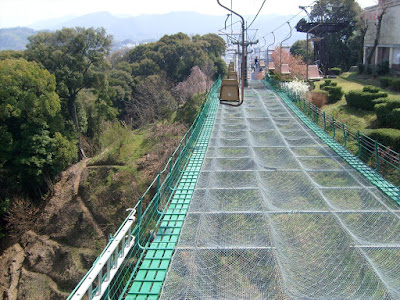
I had by now exhausted my castle-exploring needs for a so I headed back down the way I had come and happened across the entrance to the chair lift and ropeway. Since I'd never been on a chairlift before I decided to give it a go (I was counting off the various modes of transport I'd been on throughout Japan and it was getting pretty extensive). After a little confusion with the tickets (and some helpful, patient smiling attendants pointing me at a now-obvious ticket machine) I paid my 1000yen and got on. Sort of, anyway. Chairlifts are a little wobbly at the best of times, and a moving target to get onto, but I just about managed to insert my buttocks into the scoop at the correct time and off I swung.
The netting below looked less than able to hold my weight should things go wrong, and the nasty branchy thorny brambly woodland underneath looked even less appealing, so for the first half I held on for dear life while the chair found its equilibrium with the forward motion and stopped swaying. As the ride neared its conclusion I found myself relaxing a little and enjoying the morning sun and gentle breeze, until I realised that at the bottom I would have to disembark. Fortunately there were yet more people to come to my aid at the turnaround point and I managed to unscoop myself and carry on through the entrance shop I had missed on the way up and was finally deposited back on the street I had walked up.

The day had progressed well and I had a little time left, so I carried on along the Ichibancho-dori main street until I came to the entrance of Bansui-so, a French-styled building used for various art exhibitions which unfortunately had been closed for refurbishment (you can see it here with its clothes off), so only the modest gardens in the grounds were available to look around. Aside from a reconstruction of Gudabutsuan, a house inhabited by a Shiki Masaoka, a famous Japanese Haiku poet, there was little really to do without the context of what was on show inside, so I moved on.

The main road darted to the left, and by going straight on, I travelled through a pleasant nature trail, with a hillock to the right covered in trees and shrubs and a moat to the left, keeping a bit of nature between the walkers and the main road and home to a family of swans, each with their own floating 'kennel'. It was the very outer perimeter of the castle, and gave you an idea of just how influential the ruling classes were out here. Within these bounds is the Prefectural Art Museum, in which I passed a little time looking at the calligraphy and children's charcoal drawing exhibits they had going at the time.
Getting a little bored, I looked for a building I had spotted on the map that provided cheap internet access, but typically when I had found it they were closed on the last Friday of each month, which just happened to be today. D'oh.

I headed to the nearest tram stop to head back to the station and waited. And waited some more. The trams were having to share a single piece of track at this point, and so far they only seemed to be heading in one direction - away from where I needed to be. Consulting my map again I realised that I was on the wrong line - again - and started the long trot along the line to the place I should have been at. Eventually, I arrived back at the station, although I had well and truly missed my intended train and would have to wait for an hour for the next one. I spent the time in the pleasant midday sun munching on what recognisable sandwiches I could find and one of those green tea KitKats they were flogging everywhere. Eventually I got onto the train and headed east.

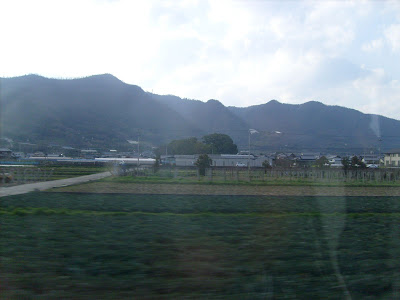
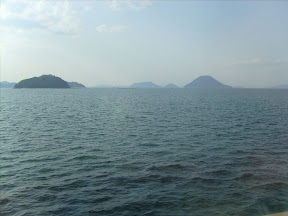
For a train route that hugged the north coast, it was distinctly light on beautiful sights. What few shots of the Inland sea (the straight of water between Shikoku and Honshu) I could get were uninspiring and often polluted by the usual power lines or ugly buildings, so it was a pretty dull experience, save for the constant worry that I was not on the right train; my ticket's carriage number was 7, but there was only four carriages on my train. The attendant tried to reassure me (assuming he understood my fears) but it wasn't until another train joined the front of ours that all became clear. At Tadotsu, the train split again, half of it heading over the Great Seto Bridge, one of several to link Shikoku with the mainland. Fortunately I was in the correct half and the carriages that were left trundled to their final stop at Takamatsu.

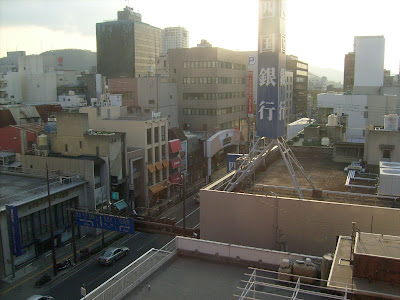
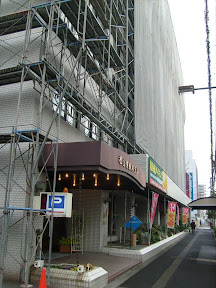
At the other end, I stepped off and into the city of Takamatsu, although the first few steps out of the station seemed to suggest it was a ghost town; it wasn't until I was firmly outside of the station plaza that signs of life came rushing back. Wide roads split by a carriageway was the norm, often lined with trees and flanked on both sides by huge department stores and business offices. The map to the hotel showed the hotel as being several blocks away and, carefully counting the roads I crossed as I went, I was able to find the hotel, as well as a JTB office just on the corner of the same block. The hotel itself, the Takamatsu Washington, was a plush business hotel (with a sleazy looking entrance), and I was looked down upon I'm sure by the clean crisp-cut suits as I staggered in, trailing my less than clean shoes over their fancy checkerboard floor and not looking my absolute best it had to be said. No matter, I headed up to the room after checking in and dumped my items, then went back down and after a little internetting, headed out for some food.

Predictably, this would be an Italian again, which I managed to find after a little scouring of the nearby streets in a block circle around the hotel, although I would have been confident to go somewhere a little different had the opportunity presented itself. Eggplant and spicy beef spaghetti was a little different to the norm, I convinced myself, with some very vegetable-laden tomato soup for starters. The 'white chocolate cake' was actually choc-chip spongy stuff with some cheesecake on top. It was all a little pricey (weighing in at about 2000 yen - about a tenner which was quite expensive for a Japanese meal) but very nice. I ambled the long way around the streets in the darkness until I reached my hotel once more and then went to bed.

Baghdad Rocking

As an aside to the Cambridge Film Festival post, those who found the 'Heavy Metal in Baghdad' film we saw intriguing, you can listen all this week to a radio catchup documentary with them on BBC Radio 4. Not sure if its available outside the UK but mainlanders can click here to listen to it. Acrassicauda are now living as refugees in Iraq and their aim is to gain asylum the US and make their names there. It'll be available until 18 October.

Leeds Film Festival 2008

Hot on the heels of Cambridge comes the Leeds Film Festival. Typically larger and with more exclusives than its southern counterpart, the Leeds one comes with the advantage of festival passes, meaning that you can see lots of films for relatively little cash. I'll have a go at beating last years' marathon, and would recommend it to anyone bored with the bland, safe-marketing-bet films you get in cinemas the rest of the year.

Japan 15 : Liberation


After the relatively sedate pace of yesterdays walk around Hiroshima, I felt refreshed, although now the fog had lifted on my bodily state, it was clear I had picked up a cold from somewhere. Not good for the upcoming task. I started out by getting to the local JTB to sort out a few more places to stay, but it wouldn't open until half past ten. I sat in the bakery/cafe at the entrance to the railway station munching on some pastries for breakfast and pondered whether to wait two hours or get going. In the end I decided that two hours were not to be squandered today, and I would risk trying to find the JTB in Matsuyama tomorrow.

My first destination today was the summit of Mount Misen, the mountain on the island of Itsukushima, commonly known as Miyajima (shrine island). Japan is known for three beautiful views, of which this island is one. I'd narrowly missed one of them as I'd passed Sendai, so I wasn't going to let this one get by me, regardless of my personal state. Once I'd made the summit, I'd cross onto Shikoku island to get to my hotel in Matsuyama and get down for the night. Given the amount of distance to cover, it was clear I couldn't be hanging around, every second counted today.
I got back to the hotel and checked out. Taking a final look at my emails, K's Backpack Hostel at Mt. Fuji had got back to me with directions from Nagoya (near to Osaka, one of my upcoming stops), so I noted them down. K's was the only place I had pre-booked before coming, and it was a bit of a mystery how I was going to get there from just looking at Google Maps. Now everything had been made clear.
I went through the subway with a feeling of clarity in my head and hopped onto a #5 tram. We clattered merrily through the slowly swelling lines of traffic, past the stops for the peace memorials and on towards the port. However something felt wrong. I checked my book to be sure. Hiroshima has two ports - the main one that serves ferries from Shikoku and beyond, and a separate one down the coast that handles ferries to and from Miyajima.
I was on the tram heading to the former, not the latter. Checking the coloured charts above me I got off at the next intersecting stop and switched to a #3, which took me most of the way there and then a #5 again (this time in the correct direction) for the final section. I had lost a half hour already.
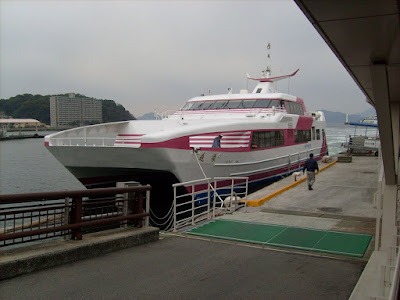
Miyajima-guchi, where the ferry port is located, is full of signposts and mock O-torii's advertising the place in typical excited cheesy style. This was deliberate, since no such things are allowed on the island to keep its traditional look so they were making the most of their last chance. I stuffed my large backpack into one of the available lockers and then hurried aboard an outgoing ferry that was just on its way. The ferries are actually owned by Japan Rail, which means the rail pass was valid for them and I travelled for free.

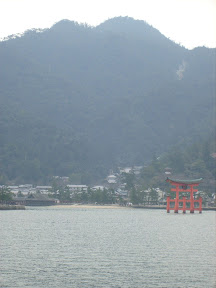
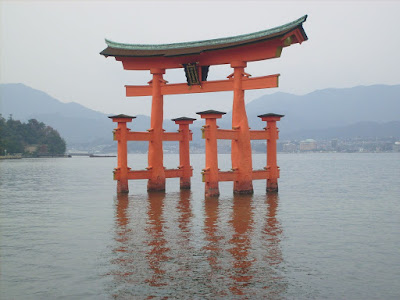
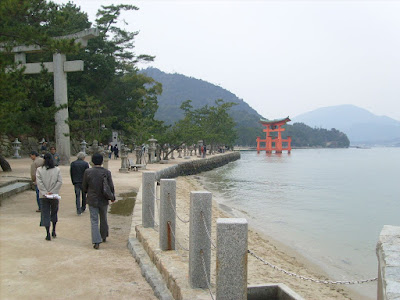
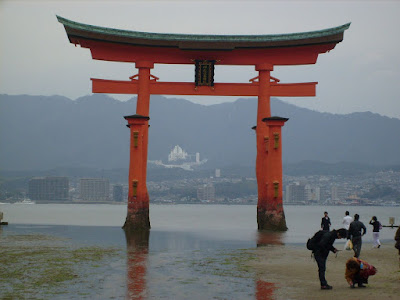
The seas were calm and the ferry glided its way out of the port. It wasn't long before the slight mists lifted and Mt Misen emerged. From mid-distance, it looked quite imposing, and I was beginning to doubt my ability to get to the top, but I would give it my best shot. As the ferry got closer, the O-Torii, one of the major attractions became distinct from the island. A huge Torii gate, bright scarlet red, built out of the sea a few hundred yards from the shore. The Torii gate acts as a presentation to the Itsukushima Shrine, a building sat square with the torii on the shore.

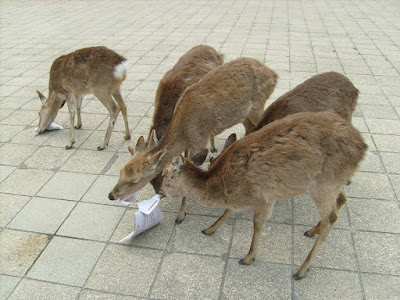
Once I'd got off and made my way through the crowds to the welcoming plaza, I got myself a hot chocolate and a bottle of water, and was about to head out when I came across some well-known inhabitants of the island. Very tame, very curious deer. I had been warned about these - they look harmless, but if you take your eyes off them you are in trouble. I saw a good example of this when one woman, taking pictures of the Torii forgot about the map hanging out of her back pocket. One deer pounced, then several others swarmed, knowing full well that their sacred status meant no-one would touch them for it. I decided to zip up my pockets and move quickly on.

Checking the welcome map, I decided to look around some of the artefacts available in the shopping district. They were clearly souvineer shops, though their looks had to be tempered to keep them in line with what the authorities considered 'tasteful'. This was a good thing, as it encouraged less plastic trinket makers and more wood carvers, fabric makers and the like to show off their wares. Working my way through the streets, which were peppered with deer going about their business as if the humans didn't exist, it was a very backyard affair. All the lower streets had become a mix of traditional Japanese houses mixed with an open ground floor containing goods. One in particular contained massive wood carvings of gods and deity's, made more special knowing that the wood had to be imported from the mainland, since no trees could be cut down on the sacred island.

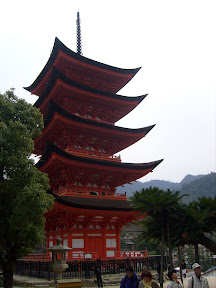
There were also a few other Shinto structures to look around while at the base of the mountain, and curious looking stairways and paths led to the beautiful 5-tier scarlet pagoda that is visible as you head to the island, as well as a couple of very old and wind-weathered temples which I must confess I spent a little longer inspecting than was necessary - the mountain behind them was rather large.

It was time to make a start, so I headed upwards. There are three trail options to take if you want to climb Mt Misen; the longer, shallower incline through Momiji-dani Park (and optionally take the ropeway to get you part way to the top), the Daishoin course, which at the time had been closed, and the shorter but steeper Omoto course. I decided to give myself the best shot at things and took the Momiji-dani course, figuring I could use the walkway if I was flagging. As the beautiful forest began to dominate my view, the wide smooth pathways and picnic areas petered out and were replaced with trails with gorgeous bridges over crystal clear waters. Heading higher, the trail steepened, and I came across more deer, though these were more wary of humans, probably not part of the group that regularly eat maps near the shore. I arrived at the ropeway but I felt as if I could make it, and besides, it cost money and I'm a tightarse, so I carried on on foot.

The trail got steeper and narrower, but it was at least pretty clear where to go. There were plenty of signs dotted about, along with 0.1km markers showing how much you had done and how much there was to go. At some points, the trail got so steep that they put rails up, and in others it was clear just how ancient the trail was, with well-worn steps threatening to bust an ankle at any moment.
At the 2km mark, (and after several rests, the cold being sweated out of me) just as I thought it couldn't go up much further, the forest opened up suddenly and I was on flat, sandy ground. I looked around to see my first glances of the celebrated views, and I had another third of a kilometer to go. After pausing for breath I carried on up along with some other sightseers and after a while came to a pair of Shinto shrines, near but not at the summit on a flat piece of land surrounded by large boulders. Both structures were achievements in themselves, being not a trivial task to cut and lug trees from other islands all the way to the top. The Misen Hondo Main Hall was full of golden ornaments and plush, shinto-red decoration. The other, the Reika-do Eternal Fire Hall was smaller and contained several lit candles, which you could add to for a nominal price.
Sat between them rather uncomfortably was an empty hut, besides which was a fragile little cabinet containing bottled drinks, and an honesty box. The box was full of coins and notes, and no-one was around to oversee whether people actually paid (or snaffled off with the cash). It may have been the intimidatory nature of the shrines and the sacredness of the island that did it, but it was so refreshing to see the trust that was placed in the holidaymakers, and seeing it returned so positively. If this were the UK, the cash would be nicked, the drinks cabinet emptied and kicked over, and someone would have rolled one of the large boulders down the hill for a laff.


Carrying on up the steps, I passed Sankido Hall, some massive rocks, and a reminder that these mountain things are finite and a bit dangerous, before eventually reached the summit, where you could see everything and for miles. Amazingly, and disappointingly, someone had decided to stick a building at the top; the Misen Observatory, a shop with a lookout tower above it. It was looking well past its best (it seemed to be made of the same sort of materials you make greenhouses out of) and was an ugly eyesore in an otherwise completely unspoilt area. Under duress, I walked in and put myself down on a rusted chair and looked through the dirty window for five minutes to catch my breath. An old guy sat behind a counter containing another drinks cabinet stuffed with drinks that may have been there for a while. I declined.
Once rested, I took the steps to the roof for a little more view taking, and then looked for my way back. Not wanting to go the same way I had come, I looked round for alternative ways, and after a while found a not very well-worn trail that headed back down. This seemed to be the Omoto course. After a little uncertain walking down a steep path (it wasn't clear at this point whether it was made by the feet of man or beast), a sign and a deserted temple helped to reassure me. A crossroads would have allowed me to take a detour to the Daishoin Course, but it had been closed due to some of it falling away.

My heart sank when the downhill started to become uphill again. I was now beginning to be unappreciative of the beauty around me and was wanting to get to the bottom once more, my ferry would be leaving at 5pm and it was already after 3 o'clock. The Misen trail was moving onto the nearby summit of Mt. Komagabayashi, which was taking far too long to even out. Worse still, there was no-one to be seen for miles. I just had to trust my instincts and keep going. Now and then there were signs of life, such as a baby Shinto shrine, or a stone shrine covered in coins (I left a 1 yen piece there) which reassured me, and eventually the trail started to head downwards. Quite quickly in fact, through wooded canopies and down ancient crumbling steps which again threatened to do my ankles in even more so than coming up their cousins on the other route.
After an hour of nervous trail walking, I started to see signs of modern construction again. The trail widened and open areas sprinkled with picnic benches appeared, followed by huts and roads and eventually houses. It was all pretty nerve-racking at the time because I was completely trusting of the trail - the ancient undergrowth and no other signs meant I was unable to get my bearings relative to the shore, but looking back I wished I could have spent some time just taking in the place, it was beautiful, ancient jungle with the sort of Laputan-style overgrowth you just don't see down the local woods, and there was talk of monkeys hanging about somewhere (but I didn't see any). I recommend downloading or buying a decent trail map and taking it with you before going. I breathed a sigh of relief as I reached the shore once more near the Miyajima Aquarium, but there was no time to visit it, (the best I managed was hearing a sea-lion bark through the railings during a show). I was now running late and would have to hurry to catch the ferry which I could see was on its way from Hiroshima to the terminal.

Fortunately, the tide was out, so I was able to cross over the section between the shrine and the Torii, taking the opportunity to take a picture of it close up. Several people were wading over to it to push coins into the cracks in the wood, a traditional tourist habit. I rushed back to the ferry terminal as quickly as I could and caught it just before it left at a dash before 4pm. At the other side, I got my backpack and took the train back to Hiroshima station, then the #5 tram like I did before (doh!) to Hiroshima Port.

I arrived at the port at 5.15, which meant that the last of the cheaper ferries had gone. The only ones leaving now were the luxury ones at 6100 yen a pop. I could have stayed the night in a decent hotel for that! It was getting dark now, and my feet ached as we waited for the incoming passengers to disembark and my little queue to be allowed on. I slumped into the luxury seating and had some shut-eye as the engines idled.
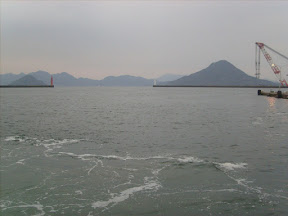
Eventually we set off and rounded the cape and a few more islands on the south side of Western Honshu. The journey included a few interesting sights, but was generally just water in what remained of the daylight, so I took the opportunity for some more slumber. I was finally heading back towards Tokyo, which at the time came as a psychological turning point - I was heading towards the place that would take me home (and it had to be said, at this point on the journey, that felt good).
Arriving at Matsuyama Port, I realised that I had made a little mistake. When I got the hotels booked, out of habit I had asked for one close to the train station. Unfortunately the port and the station are across town from each other, and thus my first task was to find the station and walk from there.
Immediately as I arrived, it seemed that Shikoku was different. The number of English signs dropped dramatically, and those who spoke it were rare too, as if Shikoku was often ignored by the tourism trade. Arriving outside into the rain, there was by good fortune a coach waiting outside, and asking the driver about 'Matsuyama Eki?' resulted in a nod and a smile. The coach made its way around Matsuyama in a roundabout style, and eventually the station appeared through the raindrop-blurred windows. It was then just a case of heading up the main street and to the hotel.
As was traditional with the maps that came with the hotel reservation, someone had got feet and inches mixed up, and the relatively simple task of looking for the hotel was made more difficult than I was hoping for, despite receiving help from a couple of friendly passers by. At 7.30 in the evening I checked into the hotel that ended up being about 500yds away from where it was advertised.
After getting my breath back, I headed over the road to a shopping arcade (sorry - 'gourmet hall'), inside which was - to my relief - an Italian restaurant called Capricossa. I was still feeling a little guilty about not trying some more regional cuisine, but since my holiday was very nearly cut short by such experiments back in Kyoto, I decided to sod it and stick with something recognisable.
Garlic bread, chicken and hot chilli/garlic and spaghetti were accompanied by ice cream with hot blueberry sauce. They even had tea - not the Japanese type of tea, but normal English tea - with milk! It cost a bit per cup, but I had two because it felt so long since I had anything close to a proper cuppa.
I waddled home tired but happy at about 9.30, wrote my diary and went to bed. A whole new island was ripe for exploration in the morning.

Cambridge Film Festival 2008 - Part 2

Carrying on from the earlier post, this is the second half of our stay.

24th September

Today was all about the past.

House On the Hill Toy Museum and Mountfitchet Castle (site)
After a bit of a lie in, we decided to try and repeat yesterdays' 'random-direction-find-nice-thing' train of thought and headed off south down the A10 towards Royston. After some driving through the rain, we still hadn't seen any green fun signs, so we checked the map. Bishops Stortford seemed to contain a few of the little symbols and was only a few miles due east, so we cut our losses and headed towards a castle symbol, which turned out to be Mountfitchet Castle, on the edge of Stanstead Airport.
First impressions for a castle were.. odd. Firstly, it was next to a railway station, in a valley; not the most secure of places to stick a castle traditionally. Second, as we looked around, there was nothing castle-shaped on the horizon. Still, we'd paid our car park fee now, so it was going to bloody well entertain us for the next hour at least.
Still feeling the twitches of excitement, I bounded into the gift shop/tickets area and asked for two tickets, only then realising, as Ms. Plants had done, that the tickets were £8.50 each. Still, this is London (ish) so us northerners should bite the bullet and enjoy ourselves regardless of the price.

Good news then that the tickets weren't just for the castle - you were also able to take the magical wonder trail to the House on the Hill toy museum too! The trail ended up being a gravel path round the edge of the castle grounds, featuring a talking tree to entertain you as you passed by. I say a 'talking tree' - I guess that's put you in mind of some magical moving tree with arm-branches that sway about, or at least a big plastic tree-like structure with a moulded face and perhaps some light bulbs for eyes. It was in fact, just a standard, slightly dead tree that had a loudspeaker stuck in it.

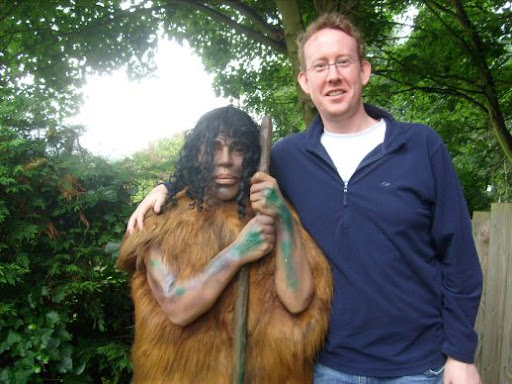
For some random reason, the toy museum was at the top of a big slope (the hill) and was surrounded by large plastic dinosaurs and cavemen, and a rocket, as if some theme park was having a clear out one day and they decided the outside of the museum needed some novelty garden ornaments. Some dinosaurs spoke to us, via the deftly concealed crackly speaker hidden under a handful of sticks placed somewhere in the vicinity, and the odd amusing sign about dinosaurs eating parents for being grumpy rounded out the prelude.
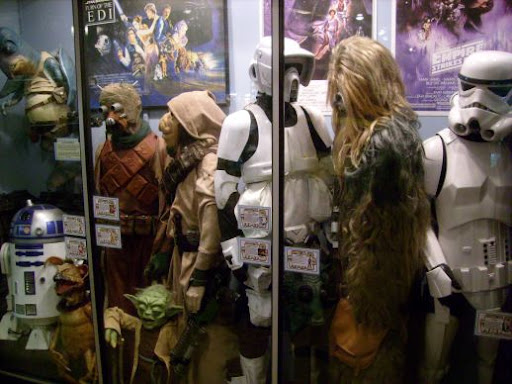
Once inside, well. It was a haven for the toys and games and giant life-size mannequins of yesteyear. Del and Rodney's Robin Reliant sat comfortably against a Dalek and a Police Box, with Bagatelles, Beatles Posters and Baboons in Shades littering the place. Directly opposite the entrance was possibly the strangest sight; several lifesize Star Wars figures - Chewie, Yoda and an Imperial Stormtrooper among others - were standing diligently in a thin glass cage, looking less like they were in the middle of a film and more like they had all just encountered each other in a lift and were trying not to make eye contact. Somewhere in the chaos, we received a weary 'Hello' from the curator, who beckoned us to come in. That Reliant really was used in one of the shows, we can inform you.
Room upon room of densely-packed displays of toys greeted us. Thousands of dinky-toys, rusting Meccano cranes, huge crèches of dolls, some old arcade cabinets (Robocop looked a little peaky) Lego bricks on one of those tables for the kids to play on (ripe for rude word education) and battered, torn comic annuals were to pour over, and to be fair, this part was pretty good for going down memory lane. Countless times we both did a 'I had one of those' followed by a sigh of fond remembrance.
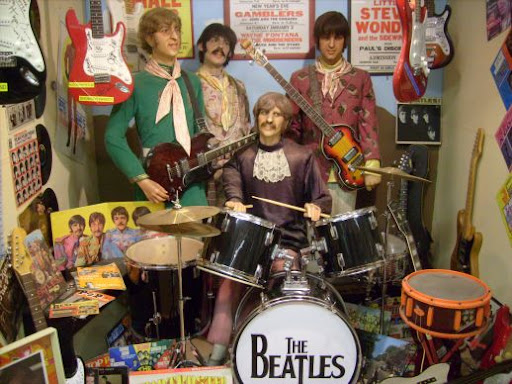
It would have been fine, except for the things that didn't quite go in a toy museum. Life-size models of the Beatles, for one; looking shifty and a little scary, or perhaps the miniature Lady Di shrine, where one of the main pulling points (a bike she rode as a kid) was proudly displayed in what I guess in some peoples' eyes is a major coup. Lastly were a few of the displays, where you could press a button, or even just walk by, and the dolls inside would start up and re-animate themselves like the evil dead. Worse still for some of the kids, some of them weren't working right and so you'd get a single eye moving around in its socket instead of both of them, or an arm wrenched away from the body as the doll tried to raise itself from the grave that was its bed. It was all a bit disquieting, especially as there was almost no-one else around.
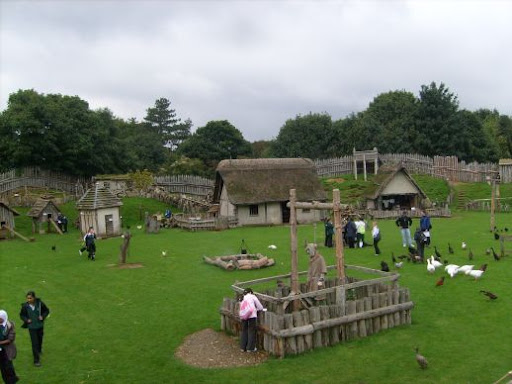
Feeling we had quite enough, we said our goodbyes to the scary dolls, Yoda and the cavemen and headed back under the talking tree to the castle entrance. By now at least the skies were blue, and it was a good thing too. Mountfitchet castle was a castle in the Norman sense of the word. In otherwords, no large, imposing structure you could walk around, rather a large field shielded by staked fences, containing stone huts and a few wooden lookout towers. For what it was, there was a certain amount of entertainment to be had; each of the huts had been kitted out with a presentation of Saxon or Norman life, complete with hidden speakers and buttons to press. Both the sights and smells of England of the time had been recreated, with the sort of smells you encounter in the Jorvik Viking Museum being put to shame. The whole area was also home to a number of rescue animals such as hens, goats, deer and ducks, who all had got used to the constant influx of people and were enjoying whatever titbits they could wangle out of people. Quite understandably, the whole place had been commandeered by an army of schoolchildren who were climbing everywhere, pressing all the buttons, and generally burning energy, and I would say that is essentially the target market for the place.

A Matter of Life and Death (UK 1946) (wiki)

A Matter of Life and Death was one of those films I had been told about but never saw, and hearing it was being shown, in a restored print, no less, was an opportunity I was not going to pass up. It is a story about Peter, a World War 2 pilot who is the only survivor of his plane crew after a bombing raid. The plane is still in the air but in bad shape, and surviving a landing is out. His final message before bailing out to his certain death is to June, a US radio officer on the ground. In the few minutes they spend talking to each other, they fall in love, and then feeling that the situation is hopeless, Peter bails out.
But he is not killed. Instead he washes ashore and finds June, and quickly they become inseperable; but there is something wrong in heaven - Peter should have died, and when the powers that be send someone down for him, he challenges them by appealing the decision, and has his case tried out in celestial court.
For a film made over 60 years ago (one of the first in colour, and one of the first to mix colour [down on earth] and black and white [up in heaven] sequences), this new print looked like it had been made yesterday, and the originality of the plot and the sharpness of the script made it a great classic film. If you can put up with some slightly cheesy special effects and a few plum accents, it's heartily recommended. 8/10

Dr Strangelove (UK 1964) (wiki)

Our second film was also an oldie. Dr Strangelove is a deeply satirical film by Stanley Kubrick, someone who is very good at dividing an audience. Its about what happens when you give the big red button to someone who perhaps is not best placed to decide when to press it. In this case, the increasingly demented General Jack D Ripper launches a nuclear air raid attack on Russia, because the voices in his head were getting a bit too loud. Peter Sellers plays three parts in the movie; GC Lionel Mandrake, the nervous and very English officer caught in the sights of Rippers' delusions and perhaps the only man able to stop him; the President of the USA, Merkin Muffley, the hard nosed politician dealing with the soviets and hot-headed generals in the War Room; and Dr Strangelove himself, an ex-Nazi scientist who came up with the doomsday device that will automatically trigger armageddon in the event of a bomb hitting Soviet soil.
Though there were some good laughs in the film, not to mention the iconic scenes ('Gentlemen - you can't fight in here, this is the war room!' and Major Kong riding the nuclear bomb as has been parodied many times), but by the end we both felt it was missing something, or that we hadn't fully grasped what was being satirised. Perhaps a second viewing is in order sometime.. 5/10

25th September

Central Cambridge
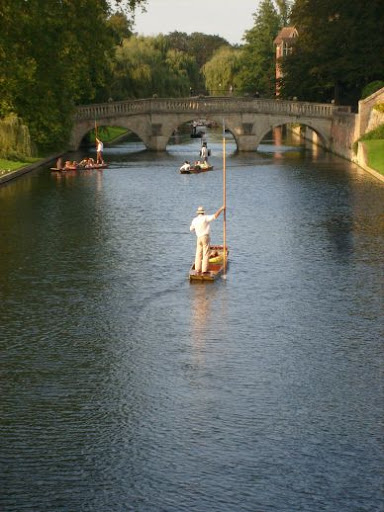
We had been round the centre of Cambridge a bit before this point, but today we would have a proper go, concentrating mainly around the Cam and the university buildings. A good place to get bearings is Great St. Mary's Church, where you can climb the 125 or so steps to the top of the tower and get some good pictures of the architecture and the market place. We also went for a punt after being badgered on the high street by a studenty type. (Tip: never take their first offer - the price will always come down if you haggle) and got some gorgeous pics in the midday sun.
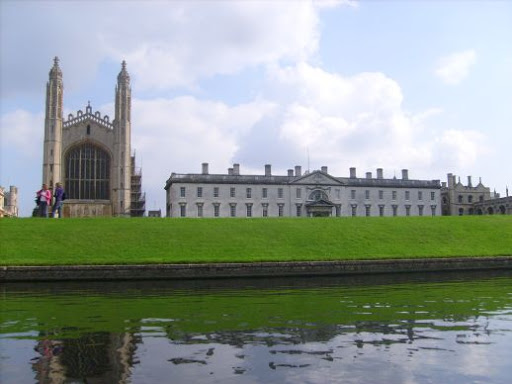
We stopped off by Kings College Chapel and fantasized about setting dogs on the poor people if we owned the Gibbs Building, did some possible trespassing into areas that may have been student-only, but were not signposted either way, and after taking a few piccies and looking round the nearby shops, called it a day.
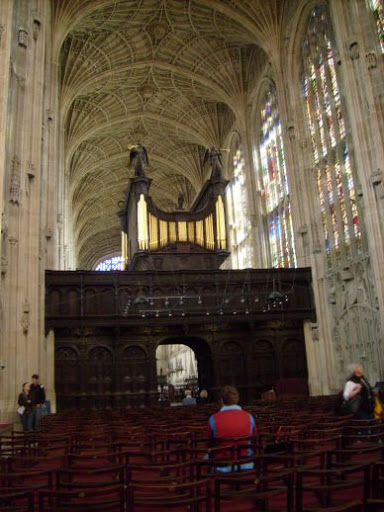
Strength and Honour (Ireland 2007) (site)

The only film of the day will be shortly released nationwide. Strength and Honour is set in Ireland - or at least a Holywood varient of it - and is about the retired boxer Sean, who hasn't gone in the ring since killing his sparring partner by accident. Now a widower, his young son needs surgery to stop him dying of the same cause that took his mother. Sean himself, played by Michael Madsen, is the good guy that the audience gets behind, and his foil comes in the form of Smasher, an unredeemable and violent figure played by Vinnie Jones, the current and undefeated holder of 'the puck' - the bareknuckle boxing crown held by the gypsy folk of Ireland. Without going into detail just where the gypsies come up with it, the title comes with a prize of £300k, just enough to pay for flights and medical treatment.
So the main ingredients are in place, and with the additional audience manipulation of Sean having to sell his house, live with a pack of gypsies, and when it shows him react with soul-searching and modest reservation when his new motorhome gets smeared with crap, we're all rooting for him. I don't need to give the ending away because it's pretty obvious what happens, but the journey is quite entertaining. The bare-knuckle fighting is surprisingly raw and can be uncomfortable to watch, and dispite being full of the sort of cliche these films carry (yes, the training montage is present and correct) it is enjoyable. Seeing Richard Chaimberlain out of retirement in the 'Mickey Goldmill' slot is a pleasant surprise, not to mention a very convincing Gail Fitzpatrick as the mother figure of the Gypsy clan (Father Ted fans may remember her cheeky appearance in Speed 3) getting my vote as the most entertaining character. Overall though, it could have done with being a bit less one-dimensional. Sean could have been less selfless and navel-gazing and perhaps have a few rough edges so we can make up our own minds whether to root for him or not. Likewise, Smasher could have been less pure evil and more like a human being, and the characters around them could have been a little less like amalgams from the script fragments on the Rocky cutting room floor or token Hollywood-Oirish lovechilds.
At the end of the screening, Director Mark Mahon and Gail Fitzpatrick held a short session where they answered questions about the film, and Vinnie Jones sent over an audio message for the film festival goers, which was a nice surprise. The talk went on for a bit, mainly because Mahon can talk a lot without saying much (and isn't too modest with it), meaning poor Gail Fitzpatrick was given little airtime for her questions, but it was an insight into the whats and whys of the resulting film.
It was good. Very good in places, but clunking, manipulative and plastic in others. 6.5/10

26th September

New Romanian Shorts

This event was free, and being a northerner, I wasn't going to pass up on something like that - especially in Cambridge, where ice creams come with their own mortgage. Each film was about 10 minutes in length.
The Boxing Lesson : A man takes his bullied child to a boxing school, and ends up having to show his own worth in the ring when he is accused of being too much of a pushy dad. 6/10
Megatron : A spoilt, grumpy child gets to do what he wants on his birthday, which involves dragging his mother to the local MacDonalds, where the Megatron action figure is included in a happy meal. When father doesn't turn up and Megatron is sold out, the film ends with a focus on the mother, whose day is about to get worse. 5/10
Nice Day for a Swim : Three youths hijack a van with its driver tied in the back. On the way they pick up a prostitute and drive to the beach where they have their way with them, nearly killing the driver. A depressing, unpleasant film that got my anger up. 3.5/10
Life is Hard : A woman used to an automatic car finds herself using her dad's manual car and causing a traffic jam. Suddenly a man with a knife reaches in and takes her bag, but has to get in to avoid the police who have come to see what the jam is about. In a delightfully absurd twist, the man starts giving her driving lessons, and eventually even goes out of his way to get her to her meeting. The little touches as the end credits roll are the icing on the cake. 7.5/10
The Yellow Smiley Face : A very simple but effective film about a couple of middle-age parents attempting to turn on a computer and sign into a chat program so they can speak to their son in America. The bickering between the parents as they attempt to follow the presumptious notes written by the son and the reactions to what most computer literate users would think nothing of doing put me in mind of several attempts to get my parents to even touch a computer. 7.5/10
Waves : Following a brief coming together of three groups of people at the beach. Teenage poseur goes to look at the ladies and show off his skinny body. He happens upon an attractive Swedish mother and her stupid-looking son, whom poseur agrees to look after while she goes for a swim. A fat husband and his snarly wife look on as a similarly proportioned couple get it on in the middle of the crowded beach, then the husband heads off to the sea, where he meets the swedish woman. Things go a bit wrong when he tries to teach her to swim, and poseur is left holding the baby. Will he abandon the child or care for him? 6/10
So, two naff, two so-so and two good, then. Overall, worth the effort.

1000 Journals (US 2007) (site)

You may have come across the 1000 Journals project. It's had a web presence since its inception in 2000. Its premise is simple. Someguy (that's his pseudonym) got hold of 1000 blank journals at the turn of the millennium, and after giving each one its own cover art, and some instructions inside, started sending them off into the world. Some close by, some posted off to random places. The idea being that the desire to create art does not leave the average joe, but instead is suppressed by the monotony of day-to-day life. Receivers of the journals are encouraged to express themselves however they want on a few pages, then pass the journal on. When the last page is completed, it should then be returned to Someguy so he can put it on the web.
It took 3 years for the first journal to be returned, and in that time, word had spread about them. A website was created to allow people to join a request list so they could receive one of the journals, and the queues were growing.
The film follows Someguy as he tracks down the other journals, and interviews some of the authors of the pages on his travels around the world, highlighting cases where the receiver was offended by what the sender had included on the pages, or giving authors a chance to review a journal they had written in, some of which had been written over by more selfish contributors. Even though the film doesn't progress beyond this journey (other than to promote the accompanying book release and the 1001 Journals sister project), there was enough variety on offer by examining the personal lives of the people these journals passed between and it is a fascinating look into human expression when left to develop without restrictions.
At the end, director Andrea Kreuzhage joined the audience on a live link up from America (at least, after a fashion of knob twiddling and wire swapping), which was really wierd but disconcerting since the person on the cinema screen was now reacting to the audience! It made the film that extra bit special and can be seen here. 8.5/10

27th September

Where the Water Meets the Sky (UK 2008)

Morgan Freeman narrates yet another African documentary, this time about a group of women from a remote area, coming together as volunteers from local villages, and given basic camera and sound training so they can produce their own films that highlight the hardships they face as a community. After a short while debating the subject matter, one theme is shared by all of the women - the rampant spread of AIDS through the communities and the people it leaves behind. Most of the women have had friends or family die of the disease, often exasperated by the promiscuity of the men in the family.
The film has a general feel-good vibe to it, despite the often depressing subject matter. As both films proceed (the one we're watching and the one they're making) the women gain confidence in themselves and the respect of their husbands and peers in their community. When the film is finished and played in the local villages, its warm reception and positive message of spreading knowledge to combat the spread of AIDS gives hope.
Only a couple of small points may detract; the title of the film has almost no relevance to the content, other than that it is the English term for the region of Africa where the film was shot. It is also pretty subtitle-heavy as well, but that should not bother the intended audience, I guess.
7.5/10


Burma All Inclusive (Austria 2007)


Another documentary, though done in a different style. Burma is a country with many things going wrong (for instance, the oppressive actions that resulted in the 2007 anti-government protests), as well as a place of outstanding beauty and culture. The film attempts to reflect this by taking on the appearance of a promotional holiday video, showing the beauty of the many temples and pagodas deep in the Burmese forests, interspersed with some of the things you would not see on such videos; killing, emaciated prisoners, torture, oppression, and so on.
After a few minutes, the video stops, and invites the audience to come on a 16-day trip around Burma 'all inclusive' - meaning it is shown in its raw, unpolished state. The style of the film then changes to a first-person camera view, where we, as a naive and slightly selfish holidaymaker arrives in the centre of a bustling city and have to learn quickly what can and cannot be done, said or thought.
Definitely another of those eye-opening films, the film commendably avoids showing just the bad things, and instead devotes some of the 16 chapters to the more pleasant things you will see. However, the film did have a slightly patronising feel, not least the depiction of the selfish, bumbling tourist that was meant to be the viewer, and the use of puppets to explain some of the situations to us. It also had the feel of one of those dubbed adverts, that look to have been made in another country and then cleverly made so you never see anyone's lips move so it can be given a voice-over in the language of choice.
But all these are inconsequential when compared with the overall impact the film has. If you find yourself wondering how bad it is in countries without a democracy to ensure at least a semblance of freedom for the man on the street, this film is a good place to be educated. 7/10

The Black Balloon (Australia 2008)

I didn't see this one, but the lovely Ms. Plants did, so I'll hand over the keyboard...

This film deals with the struggles of a teenager growing up and wanting to be accepted and fit in with his peers. Even though Thomas has the added difficulty of dealing with a brother who has autism I feel we could all identify with the hurdles that Thomas faces as a teenager, e.g. fitting in at new school, or his first love. Thomas has a lot of responsibility looking after his brother and as you can understand becomes jealous of all the attention his brother gets from his parents and just wants his brother to be "normal". I thoroughly enjoyed the film and feel it gave me a better understanding of how it's not just the child with autism who has problems fitting in but also the effect it has on the whole family. It contains some funny parts and I would highly recommend this film to anyone and think could be a good learning tool to be shown in schools. 9/10

Rivals (France 2008)


Our last film would have been Just Another Love Story, but that got cancelled. Conversations with my Gardener also looked interesting, but that sold out. Feeling a little deflated that the festival ended early for us, we got a couple of tickets for Rivals, which was on in place of Just Another Love Story.
Rivals is set in 1970's France, around the lives of two brothers on opposite sides of the law. François is a cop, and a good one. Well respected by both his family and his colleagues. The only problem is that his brother Gabriel is a pimp, habitually in trouble and often part of any major killings or robberies that happen to go on. As we enter the story, Gabriel is caught in a police sting attended by his rookie brother and goes to jail for 10 years.
After his lengthy time in prison, Gabriel comes out with the intention of going straight, but with poor job prospects in the area the best he can get is a thankless supermarket job, and his attempts to set up a business with an ex-con partner literally go up in flames.
This was enough for Gabriel to go off the rails, and hearing about a job for a hitman, takes it up, and we see just what Gabriel used to get up to in his cold, calculated actions.
During all this, François becomes fascinated with a woman whose ex went to jail by his hand, and he wants revenge, and his family life with his brother and their infirm father begin to break down. With so many grudges flying everywhere, someone is bound to end up off-ed by the end, but who?
Rivals definitely has the feel of a 70's cop drama. It's very authentic, both in the violence, the acting and the dress code, and though you can see generally where the film is headed, it does dart off in unexpected directions now and again to keep the interest up. However it is peppered with little holes, such as Gabriels' ease at returning to the dark side, and the brothers' problems not ever getting in the way of François' police career, which may leave a niggle as you watch it. 7/10

28th September

Tropical Bird Land (site)

I found out about Tropical Bird Land just after attending Cambridge in 2007, and vowed that I would go this year. Located in Desford, just west of Leicester, it meant a small detour across the A1(M) and M1 which took about an hour and a half from Cambridge. And what is there? A collection of birds, mostly parrots, many of which are allowed to fly completely free around the site and its nearby area. Being a big parrot fan it was a must, so we made it a point to stop there on the way back to the north.
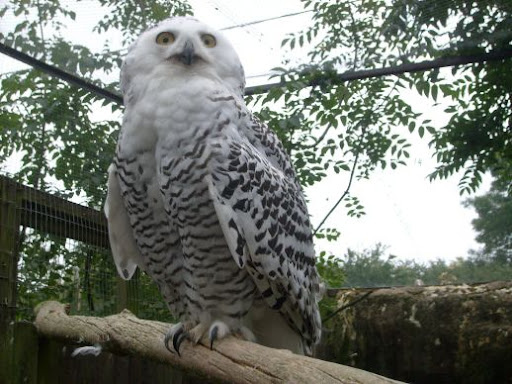
Owls up closeUnfortunately, the day was not its best, and the parrots themselves were a bit on the grumpy side due to being drizzled on, meaning plenty of stern warnings (sqwawks, growls, stares) not to put your hand too close or you might lose it. A couple of parrots were game though, in particular a green Lori, who happily climbed onto my shoulder and pressed its beak to my cheek to hear the things I was saying, although its clear he didn't fully agree with me as he grabbed my nose and gave it a 'gentle' squeeze. A bright pink Australian parrot was also very tame, and would happily sit on your shoulder rather than walk everywhere, and put his head forward for a stroking, moving your finger with his beak if it wasn't in the right place. A small parakeet also decided to land on my head when it saw the fruit and happily munched on a grape while sat on my finger.
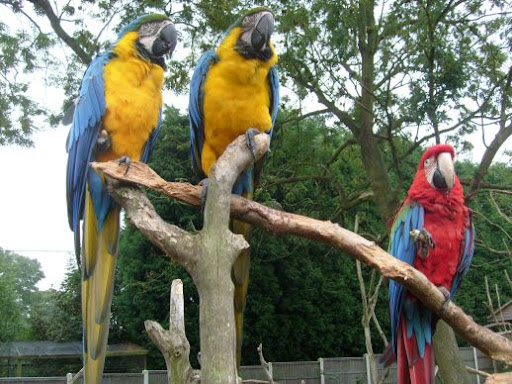
Most of the macaws were not in the mood, and looked down on the visitors with a glare, only softening slightly when they were offered a piece of fruit which they would climb down to get and the head back up again.
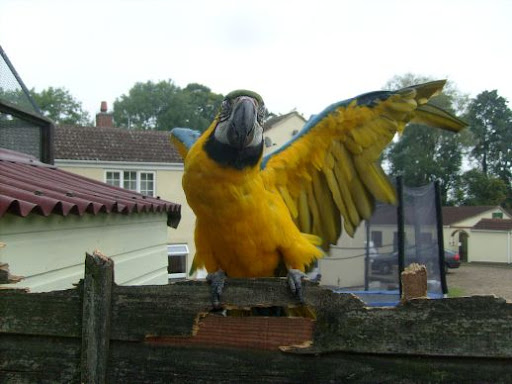
Overall, its recommended if you have even the slightest interest in parrots, as they have beautiful specimens there doing what they should - flying free. A few tips though:
  1. Go in summer, on a nice, pleasant day to catch the parrots at their most agreeable.
  2. Take a pair of gloves, just to be safe, and some hankies for the bird droppings and fruit juice.
  3. Don't panic if they land on you.
  4. Don't try to force them to get on you.
  5. They prefer fruit more than nuts (you can buy bags of both at the entrance).
  6. Take a camera.
  7. Don't stick your hand near the Psycho Cage. The parrots inside take delight in tricking you into putting your finger within nipping range.
And that was it. We left Desford as the afternoon light began to wane, and went back to the cosy north, happy that we had spent perhaps the last (only) decent week of the year well. Cambridge 2008 left us with a lot of nice memories, and we'll probably swing by for next years' festival.
Cambridge Film Festival 2008 - Part 1

Myself and Ms. Plants have returned tired and weary from Cambridge and its Film Festival, and are looking forward to getting a rest by going back at work. We didn't just watch films, we also took time out to see some of the sights and travel to nearby towns as well. It's a marvellous place, full of beautiful architecture and countryside, with the university buildings naturally being one of the biggest draws. Being a university city as well, it's full of the sort of "vibrancy" that you would expect, with less of the drunken fighting.

The films were of a generally good standard, perhaps not up to that of the Leeds Film Festival last November (incidentally, according to their myspace page the festival brochure for this year is available on October 10th, and I heartily recommend going) but the whole trip was well worth doing. As with most festivals, the films were taken from a broad pool of the worldwide output; long films, short films, future blockbusters and subtitled oddities, documentaries and comedies. There were re-screenings of some older classics which gave us young-uns the chance to see some of them in their intended setting, and the old folks a bit of nostalgia, and there was a chance to see some early examples from the quietly emerging medium of machinima.

Over the week we took in about 17 films (if we don't count splitting up the short film collections; then its 28), and below is a brief resume of each of them, plus some of the other things we did. For anyone interested in other films I've covered at these sort of things, there's also my posts for the Cambridge 2007 and Leeds 2007 over on the Old Home Bullettin Board, a nice little corner of the Internet to stroll through.
20 September

Jimmy Carr

Once we arrived, it was pretty much straight out to the Corn Exchange to see Jimmy Carr, possibly the smuggest git in the history of everything, but can be very funny as well. In a performance almost designed to accommodate the hecklers and drunks shouting things out, he gave us plenty of laughs, especially when handing over control to the audience so they can make fools of themselves.

21 September

Cambridge Botanical Gardens (site)

A bit of a fiddle to get into, but the gardens were looking beautiful. I'm not sure what sort of weather Cambridge has been having during the year but if it was anything like t'north it would have been wet and cold. Despite this, the morning sun was out and everything was in bloom and looking great. A nice easing into the week after the long drive down the day before.

The Understudy (US 2008)

Our first film ended up being a good one. The Understudy is about Rebecca, a struggling actress trying to get work in anything she can get, and eventually, through unconventional means manages to get a job as the understudy to the leading actress in Electra, a clumsy stage play set in a quasi-roman era. Simone is predictably an arse to work with, and is clearly slept her way to the top, and comes to rely on Rebecca's grungy life as a source of inspiration to get into the part, something Rebecca has already managed. On the preview night, pneumonia strikes Simone and Rebecca takes over at the last moment, and revells in her new success with her sisters, used to Rebecca's lack of progress in her chosen career.
Things start going wrong when Simone returns to take over on the proper opening night, they have a spat and Rebecca ends up pushing her off the balcony, putting her in a coma. For the moment, she gets away with it without suspicion, but with a nut-allergic replacement soon in the picture, and the lies beginning to mount, can Rebecca keep her stardom and just how far would she go? The Understudy was sharp and funny, and well recommended. 8/10

Time To Die (Poland 2007) (review)

Filmed in Black and White, this subtitled film revolved entirely around the day-to-day existence of a 93-year old woman, living in a large run-down house in an overgrown garden. Bothered by the local kids trying to break in and play in the grounds, the houses' tempremental electricity, her neighbour trying to convince her to move so he can have the land, and her lardbucket daughter whining about inheritance, her only true friend is her dog Phila, (easily one of the most talented animals to grace the screen) with whom she shares her many monologues.
We first meet with Aniela just as her current tenants are leaving her alone in the house; the only way she can continue to live there is if she can do it up and have someone to occupy the many empty rooms. She tries to convince her good-for-nothing son to move in, who seems to agree without ever getting round to it, so we see her in a frustrated situation haunting the empty rooms and looking in on the nearby lives from her window. Every now and then, memories of her past come back, triggered by some unconnected but familiar situation and we see her as she was many years previously, on her wedding day, or watching her bright son leave for school with the world at his feet. The film found its focus and became a view on the seemingly hopless fight of this likeable old woman to put her estate in order before she died.
The more I watched Time To Die, the more I liked it. If I was to give it a score after seeing the first half alone, it'd probably be a 5 or so (partly down to the white subtitles being often hidden in bright scenes but it also took its time to get going). However, I would recommend seeing it and watching through to its very emotional and satisfying conclusion, which for me pushed it up a few points. 7.5/10

22 September

God Made Them Blind (Aus 2008)

John Fawcett is the subject of this documentary as he spends the autumn of his life in Indonesia, where the rate of cateract blindness cases are at some of their highest. In a culture where such things are seen as a curse given by god as punishment for things done in a past life, the relatively simple operation to correct the problems (if done early enough) are not as straightforward as you may think, especially with those who believe trying to correct them goes against the wishes of their gods. Though the film was definitely worthwhile and it is difficult to knock one which is trying to bring an overlooked problem to the attention of the world, it did lose steam about halfway through, concentrating purely on Fawcetts' own personal life story which while fairly interesting, was not related to the main subject matter and thrust of the film. 6.5/10

UK Shorts 2

This was one of several short film segments that was on show, each film being no more than about 10 minutes in length.
Hometime : About a schoolgirl who did not want to return home from school for fear of who was waiting for her. A bit abstract and odd things happened, like orange juice coming out of the sink. 3/10
Breath : A child waiting for an organ transplant; a hospital motorcycle courier who takes the job of delivery despite being sleep-deprived, and a woman late for her job interview come together badly in an unfortunate collection of dead-ended attempts to do what they have to. Depressing but thought-provoking and well-done. 6/10
I Was Here : An un-named office worker, worn down by phone calls, pre-packed sandwiches and a sedentary lifestyle, walks home from work and decides to keep going. Eventually he gets to the shore and writes in the sand, then leaves the film to go.. where? The audience is encouraged to imagine what happens next. 7/10
Home : A teenager returns to his family home after a suicide attempt, and we see how his actions have affected those dear to him. Cleverly staged so the situation is slowly revealed. 8/10
Legion of Plotters : A stereotypical 'grumpy old man' shows us his life and the young people around him who irritate every minute of his day. They are working together for maximum annoyance, he concludes, and finally snaps. 7/10
The Imaginary Girl : A young girl lives with her career-motivated mother and spends her time playing with her toys in her room, some of which are made by her dad who sometimes visits. Both parents try their best to bring her up but do more harm than good, and those children outside don't seem to want to play with her. Time for a little imagination.. 7/10
Crosswords : A dark comedy about an odd woman lives alone in a house filled with crossword puzzles in boxes and pinned to the wall. A phone call from a pushy vacuum salesman will be the last one he makes when he comes to give a demonstration. 6/10

Heavy Metal in Baghdad (US 2008) (site)

A documentary charting the survival of Baghdads' only heavy metal band, Acrassicauda, from their formation in 2001 to the current day, dealing with wars, death threats, their friends dying in the scirmish and the world around them turning to rubble. It seemed to suggest that there are plenty of underground rockers in the country, using heavy metal to mosh out and get away from their troubles, the individual members wanting to look like their western heroes but having to tone it down a lot because of the religious restrictions around them. Even a goatee beard is risky. Thanks to the documentary maker, Canadian-born MTV films director Suroosh Alvi, they were able to film a gig in 2005, shortly before the band splitting up and going their separate ways. The second half of the film follows the director as he attempts to re-establish contact with the individual members, who were among many to move out of Iraq into nearby countries including Syria, just to stay alive.
The subject matter may not be to everyones' taste, (I'm certainly not a rock fan myself) but the story of fighting to keep doing what you believe in against oppression is a pretty universal one. 6.5/10

23 September

Linton Zoo (site)
For a bit of variety, we headed off in a random direction and ended up at Linton Zoo, which had a few delapidated cages full of overgrown plantlife, but generally the animals themselves looked pretty well cared for. Highlights included the friendly but lonely Ground Hornbill 'Oboe', who was eager to give us a present of dried leaves whenever we came to say hello, the Tapir mother and daughter pair who had learned to climb the fences to eat twigs, and a couple of African Grey parrots that came over and let us tickle them through the bars.

The Dancing Forest (UK 2008) (feature)

A documentary about Africa once again, but this time, instead of showing the brutality of infighting, the effects of rampantly spreading desease or some other problem that tears the country apart, this film showed that things are happening to help turn it around. A small village in Togo is the setting for a movement initiated by by CIDAP - a French Agricultural Development charity - that changes the way that the people are thinking about their lives. The past decades have encouraged the people to lead an individual pursuit of goals and consequently the community has discintigrated and the skills passed down through the generations have been lost. Thanks to the actions of a small group, mostly the elderly women and widows of those killed or lost to desease, they have worked to turn it around and get people to see the benefit in working for the community and with the nature and the land around them. CIDAP weren't without their criticisors; some women did not see their profit in the community work they did and others felt they were working hard where others were not, or just simply being worked to the bone to get the whole thing off the ground. This film charts the story of the movement and its successes and failures, the title coming from the communal dance at the end of the harvest to give thanks, each participant holding a large branch of a tree. 7/10

Goodnight Irene (Portugal, 2008)

A dual language film, in English with sections of subtitled Portugese, this film is a drama with elements of comedy mixed in. Set in Lisbon, a grumpy but well-spoken old English actor named Alex hobbles around the streets by day and when he needs to, continues his job as a holiday video voice-over artist. Bruno is a young key cutting shopkeeper who makes extra copies of his clients' keys and breaks into their houses during the night, not to steal but because he is fascinated with their lives and feels he must document and photograph everything about them. Both men have Irene come into their lives; especially Alex, who slowly softens towards her. One day without warning, Irene disappears, and the two team up to find her.
Though there are plenty of parts of the film I enjoyed, there were some that dragged, particularly in the middle, where Alex and Bruno squat in Irenes' flat trying to find clues to her disappearance. The director, Paolo Marinou-Blanco was present in the screening and answered a few questions at the end, some of which were understandably about the unexpected and unresolved ending, which ended up on the cutting room floor, may frustrate or inspire the viewer in equal proportions. 7/10

Running the Sahara (US 2008) (site)

Another documentary, but done in a very American style. Three runners, none of which were particularly famous, (one had been a habitual drinker and a slob only a few years previous) decided to run across the Sahara desert, that's going from the west to east coasts of Africa, and not in a straight line. One point is immediately deducted because the film we saw was incomplete; there were no subtitles and no credits at the end - this shouldn't be a problem with the finished film but it spoiled it somewhat in the showing. The subtitles were needed because one of the runners was Taiwanese, the other two American.
They ran 7500 km in 111 days, and the film is a chronicle of the hardships along the way; blistering and cramps, problems with passports and border controls and sheer mental and physical exhaustion.
It was directed (and narrated) by Matt Damon, and the American sugar coating got a bit thick in places, with plenty of meet ups with their wives/partners, and a huge team of support crews behind them in 4x4's, and a few scenes that looked a bit set up, such as some of the arguments, and all the happy children filmed jogging with them through one of the cities, or a mild diversion where one of them was lowered down a well which was meant to bring attention to a well-building project, but just looked like filler.
This was a Hollywood take on a genuine feat of achievement, a film which though I enjoyed and would recommend to others, I felt that if they had just kept it simple and raw like a journey documentary should be it would have been a lot better. Don't get me started on the protracted minutes worth of quick scene changes and whip-pans that made up the introduction... 6/10

That takes us about halfway through the holidays, I'll post up the other half soon.